

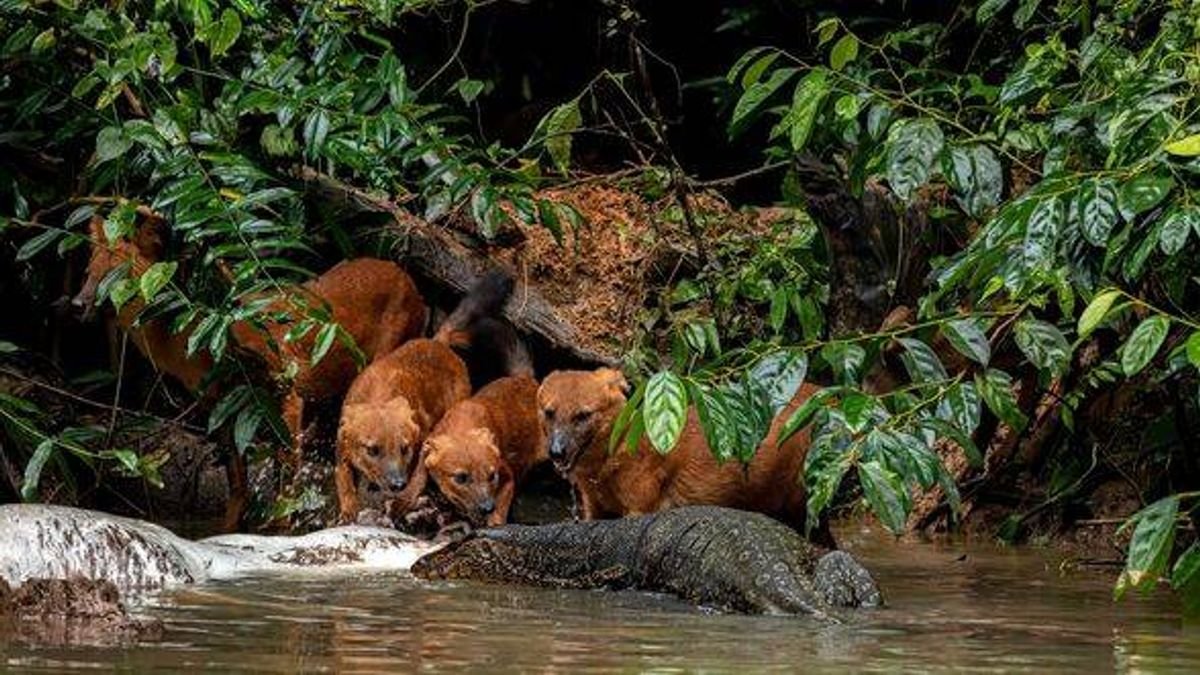

Trail cameras set up by scientists captured footage of 10 rare Indian wolves, causing astonishment among researchers. These wolves are categorized as a vulnerable species on the International Union for Conservation of Nature Red List, with only an estimated 2,800 to 3,300 individuals remaining in the wild. The wolves are facing threats from habitat destruction due to mining activities and continuous hunting pressure as they struggle to find prey.
Human activities pose a significant danger to the survival of Indian wolves, with many falling victim to poisoning or shootings, mainly due to a scarcity of natural prey leading them to target livestock. Moreover, competition for territory with common leopards and the encroachment of urban areas into grasslands are forcing the wolves to adapt to unconventional dens.
Researchers warn that the increase in feral dogs in India is exacerbating the challenges faced by Indian wolves, as these interactions can lead to disease transmission and heightened food competition. Despite these challenges, a rare pack of Indian wolves was recently discovered in the village of Madhaiganj, West Bengal, after eight months of monitoring efforts by scientists.
To ensure the survival of the Indian wolf population, targeted conservation efforts are crucial. Measures such as designating open habitats for the wolves and utilizing radio collaring for monitoring their movements are recommended. The apex predator’s ability to survive in anthropogenically modified landscapes in eastern India highlights the importance of securing remaining habitat pockets and promoting coexistence for their long-term survival.
Continued research in underreported regions like eastern India is essential for shaping future conservation policies. While Indian wolves are vulnerable in their natural habitat, zoos are playing a role in captive breeding programs to preserve genetic diversity and potentially aid in reintroduction or supplementation efforts in the future.