

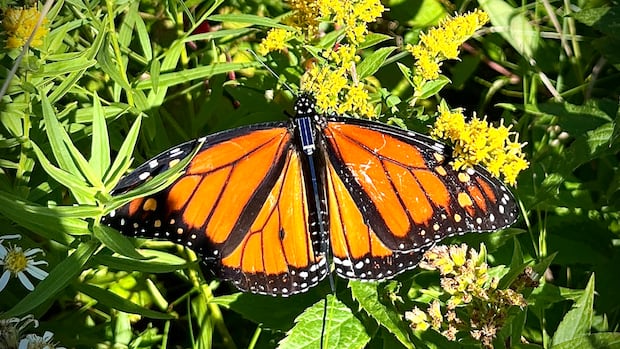

For an extended period, monitoring a tagged monarch butterfly depended on chance, relying on someone along the migration path to spot the small label on the butterfly’s wing and report it.
This year, Nature NB is utilizing innovative technology that eliminates the uncertainty.
The organization has introduced Bluetooth-enabled tags on monarchs for the first time in New Brunswick this season, collaborating with the Saint John Naturalist Club, Point Lepreau Bird Observatory, and Environment and Climate Change Canada.
“This marks an incredibly exciting new phase in the effort to conserve monarchs in the Maritimes,” remarked Francie Morgan, program coordinator with Nature NB.
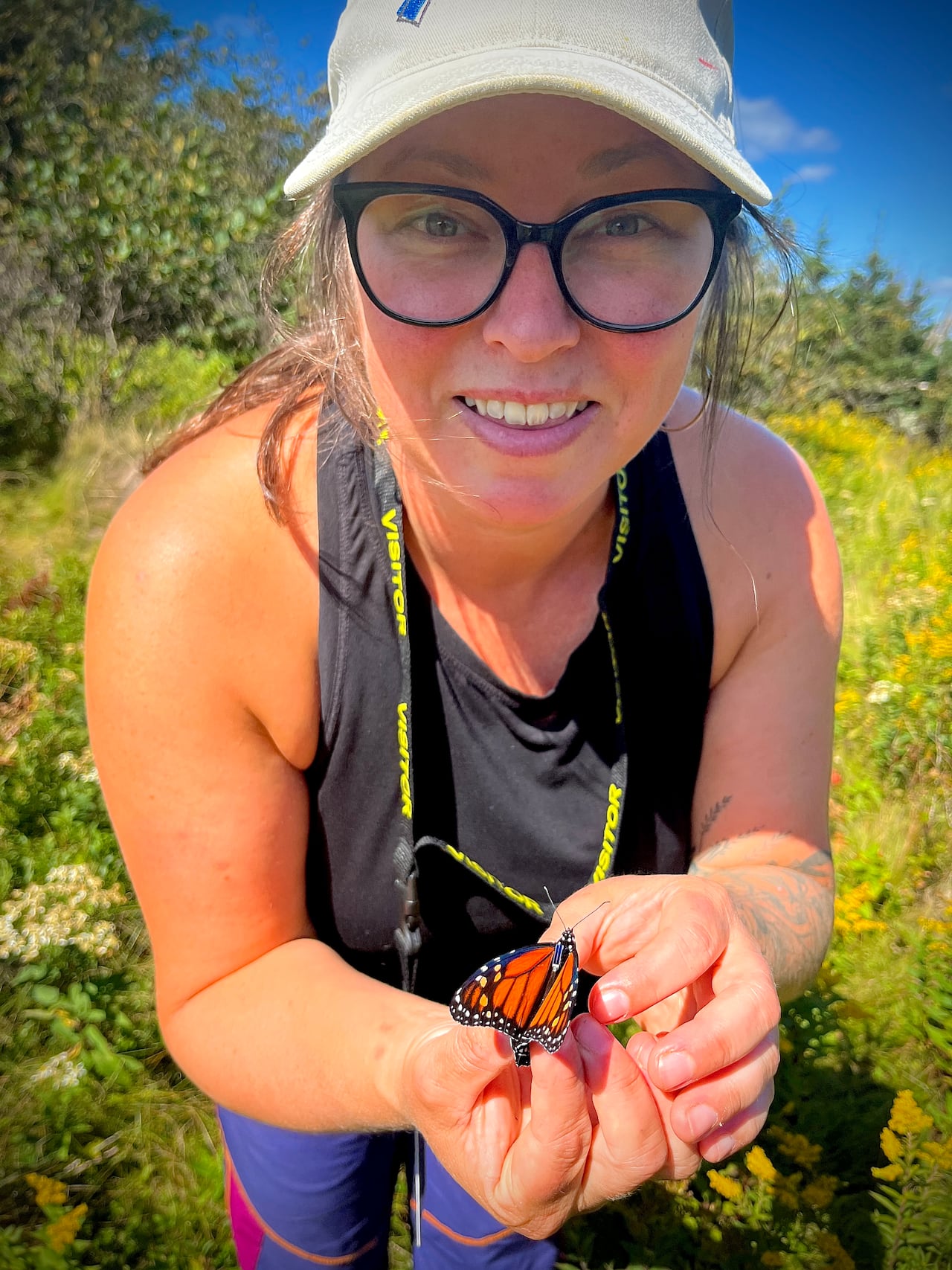
Francie Morgan holds a monarch fitted with a BluMorpho tag ahead of its release. (Submitted by Francie Morgan)
The tags, known as BluMorpho tags, are powered by solar energy and weigh approximately 0.066 grams — a tiny fraction of a monarch’s average half-gram body weight.
They are affixed to the butterfly’s thorax using a small amount of eyelash glue, with a slender antenna extending along the abdomen.
Unlike conventional wing tags, which require physical recapture for data collection, the BluMorpho tags function through passive Bluetooth interactions.
Anyone with Bluetooth enabled on their phone who comes within 100 meters of a tagged monarch will automatically gather a data point.
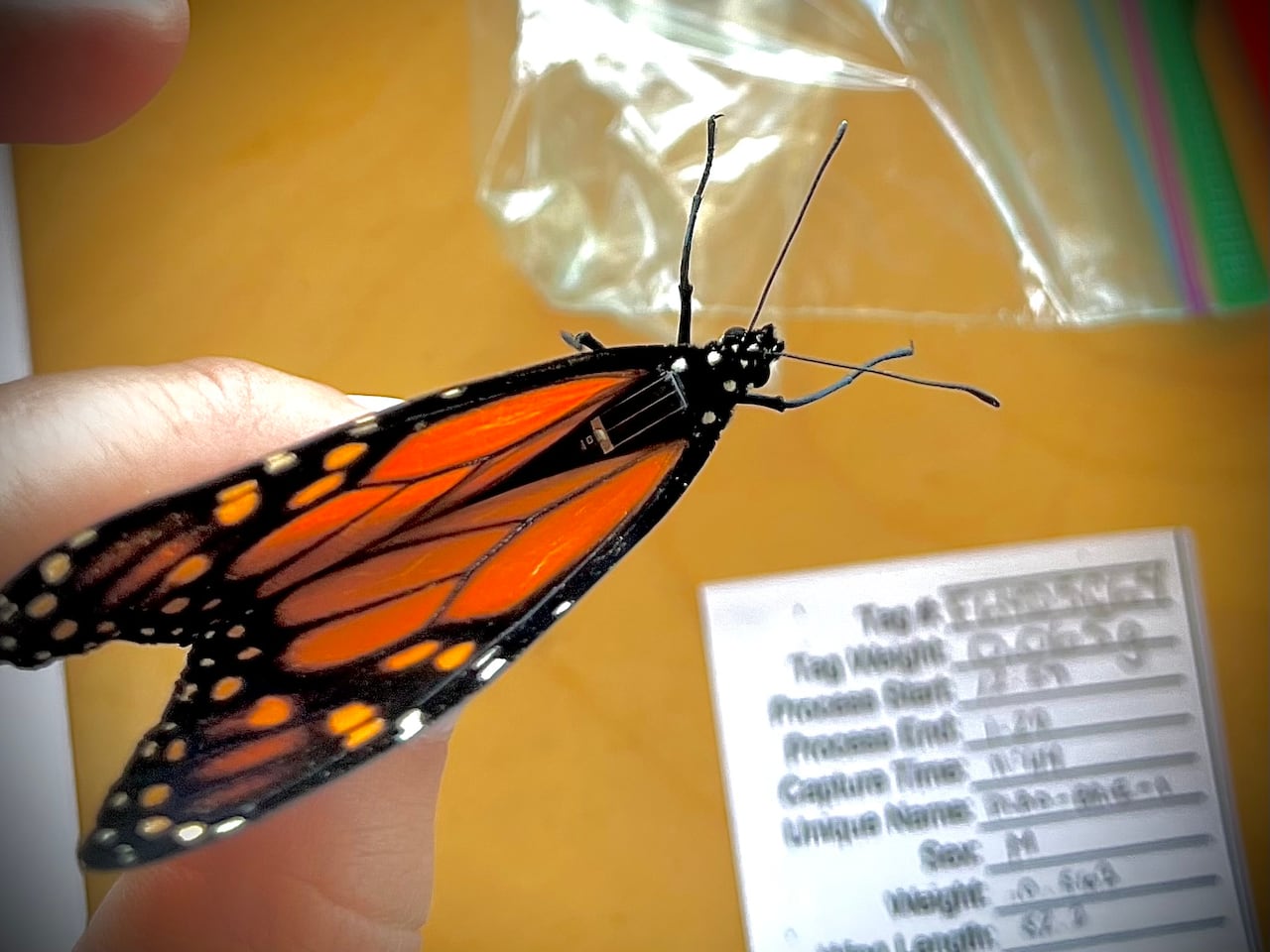
The BluMorpho tag weighs about 0.066 grams and is attached with a dab of eyelash glue. Details including capture time and sex are recorded before release. (Submitted by Francie Morgan)
“Download the Project Monarch app, scan for these tags, and follow the journey of these monarchs,” Morgan encouraged.
Jim Wilson, a birder and naturalist associated with the Point Lepreau Bird Observatory who has been tagging butterflies for many years, noted that this change is substantial.
“The previous method involved simply placing a numbered wing tag and hoping someone would find it or report it between here and Mexico,” Wilson explained. “Now it’s online; you can check where that monarch is.”
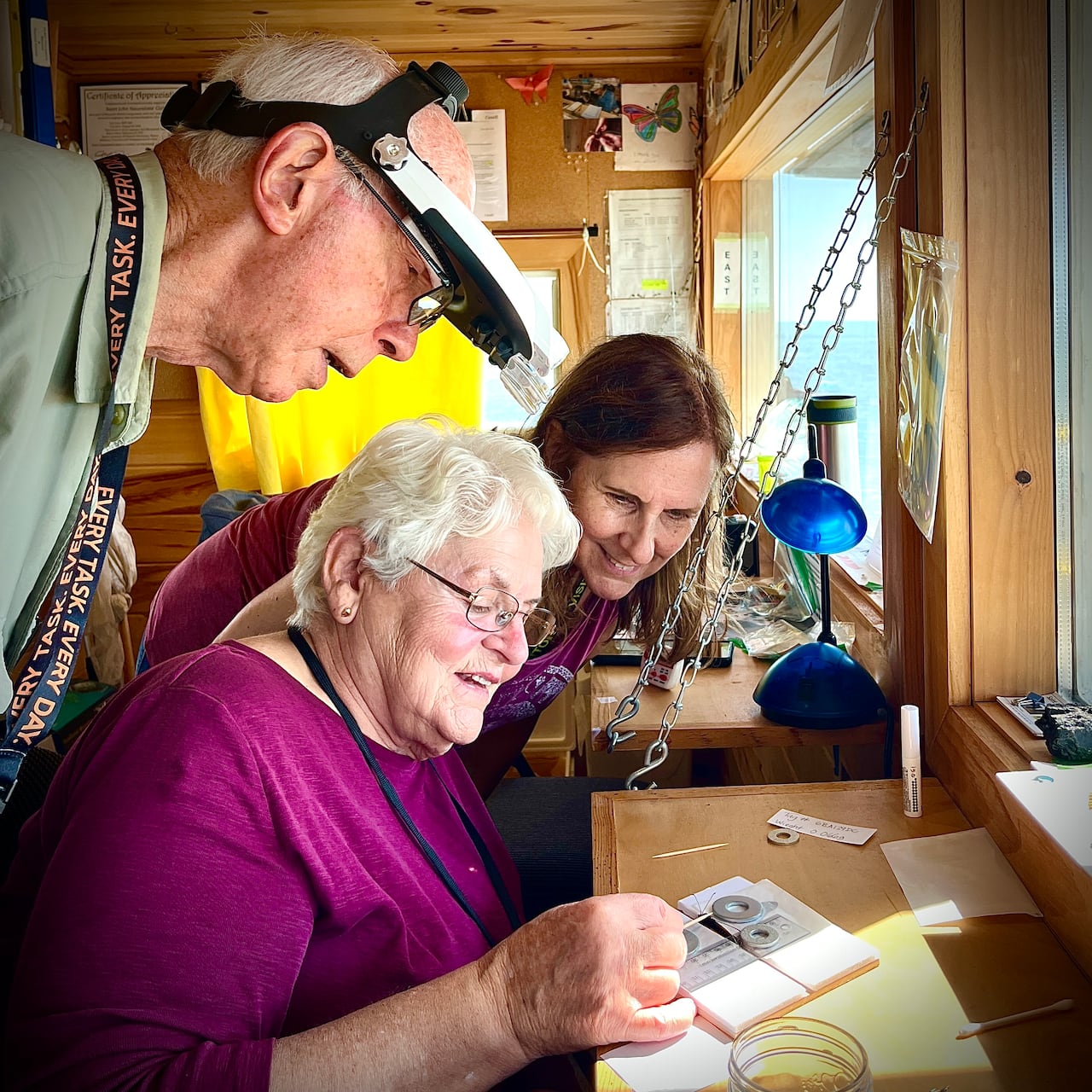
Jim Wilson, Jean Wilson, and Janet Kempster carefully tag a monarch at Point Lepreau Bird Observatory. (Submitted by Francie Morgan)
This technology was first implemented on monarchs in Canada last year through a collaboration between Environment and Climate Change Canada and Birds Canada in southern Ontario.
Nature NB sought funding after the pilot program proved effective, receiving assistance from the Environmental Trust Fund of New Brunswick and an additional 10 tags directly from the federal government.
The organization had aimed for 35 tags this season, but delays at the border have complicated matters.
“Half of our tags are currently stuck at the border,” Morgan stated. Nature NB anticipates deploying 22 tags by the season’s end, with a chance of adding 13 more if the remaining shipment clears in time.
Wilson mentioned that his team’s supply faced similar issues, with about eight of its 30 tags still held up in customs due to tariffs.
Initial data has already provided fresh insights into monarch migration patterns within the province.
Point Lepreau, projecting into the Bay of Fundy, has long been suspected as a crucial stopover for monarchs before they continue southward along the Eastern Seaboard toward Grand Manan. The new tags have validated this assumption.
“Three tagged monarchs have already departed from there and made their way to Grand Manan,” Morgan noted.
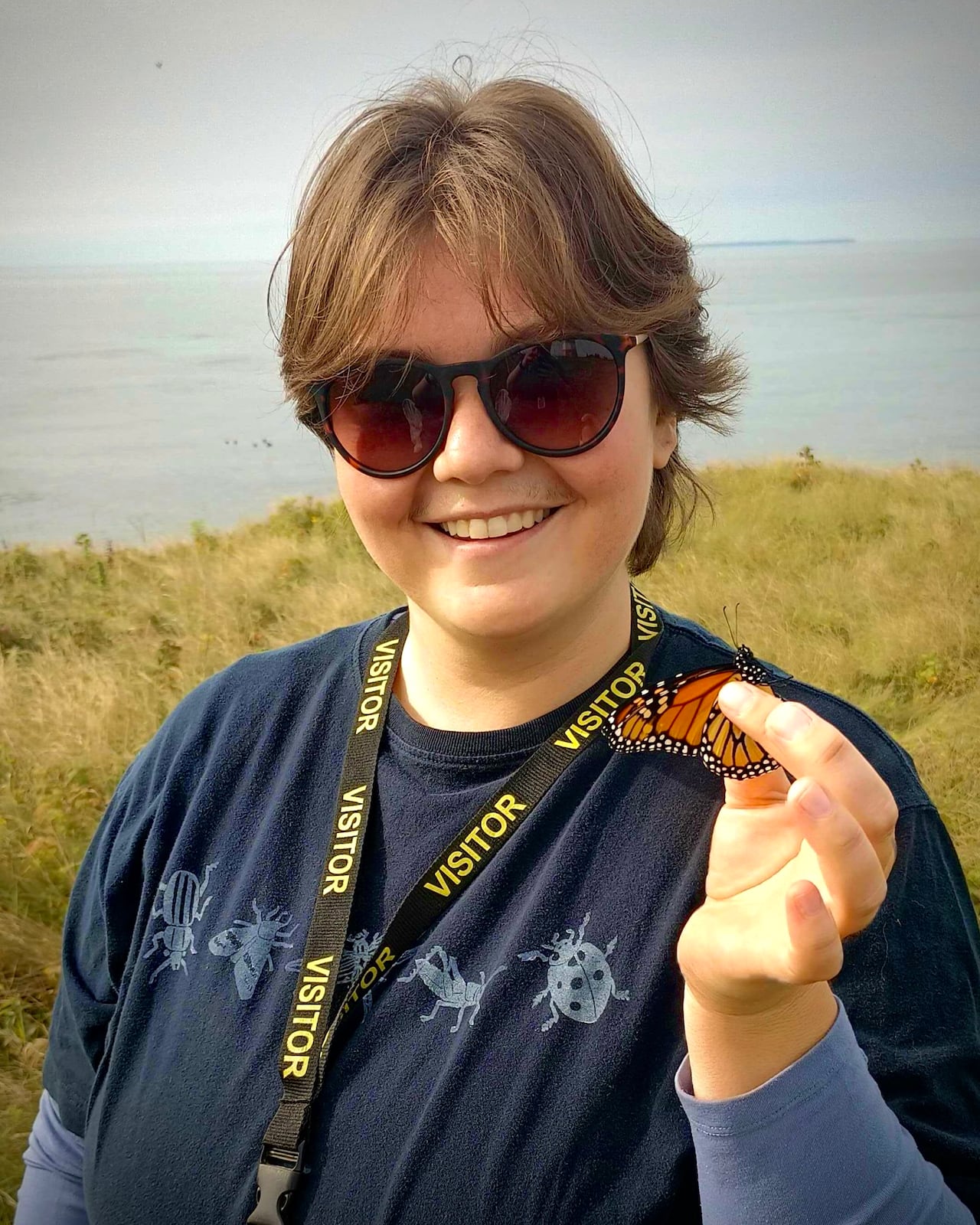
Program coordinator Brie Blair holds a monarch butterfly before its release at Point Lepreau Bird Observatory. (Submitted by Francie Morgan)
Unexpectedly strong westerly winds this season also resulted in three tagged monarchs ending up in Nova Scotia instead of heading south, providing researchers with valuable information on how wind conditions impact migration choices.
“This is indeed some very new information,” Morgan commented. “We’re eager to see what develops.”
Wilson added that tracking individual migration paths could help identify which natural corridors — such as mountain ranges, river valleys, and coastlines — monarchs predominantly utilize, allowing conservationists to prioritize the protection of those regions.
“All monarchs require during their long journey to Mexico is the ability to locate blooming plants for nectar,” Wilson explained. “If we understand how and where they travel over time, those paths can be preserved and ideally enhanced.”
Anyone interested in following the tagged monarchs can download the free Project Monarch app. Tags deployed in New Brunswick start with the prefix PLBO, standing for Point Lepreau Bird Observatory.
By the conclusion of the season, Nature NB expects that 22 monarchs in the province will have been tagged utilizing this new technology.