

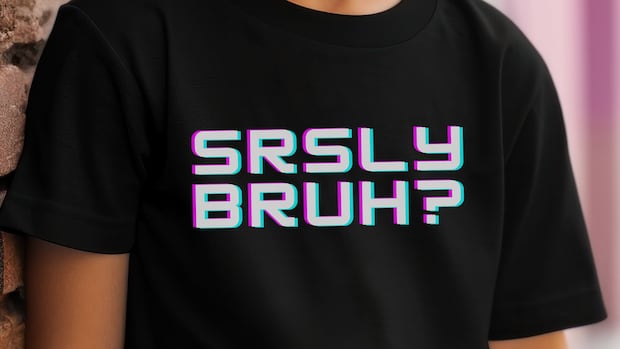

When Sam Joseph Karam received a notification from Etsy, an online marketplace, indicating that 11 of his T-shirt designs featuring the slang term “bruh” had been removed due to a trademark infringement, he felt an immediate sense of doubt.
“Typically, it’s one or two listings, not 11 consecutively. This clearly raised a red flag for us,” Karam remarked.
Karam, who runs an apparel company named Customized Designs and markets his products on platforms including Etsy, reported that the website also stripped him of his Star Seller badge — a recognition for outstanding customer service. He claims that this led to a significant decline in his sales.
The correspondence from Etsy informed Karam that the shirts were flagged by Malik Yawar Abbas, a Canadian trademark owner for the term “bruh.”
Karam is among several Etsy sellers who shared with CBC News that their products were removed after being reported by the trademark owner. CBC News examined numerous emails sent by Etsy to Karam and two other vendors, which confirmed that the removals were initiated in response to complaints lodged by Abbas.
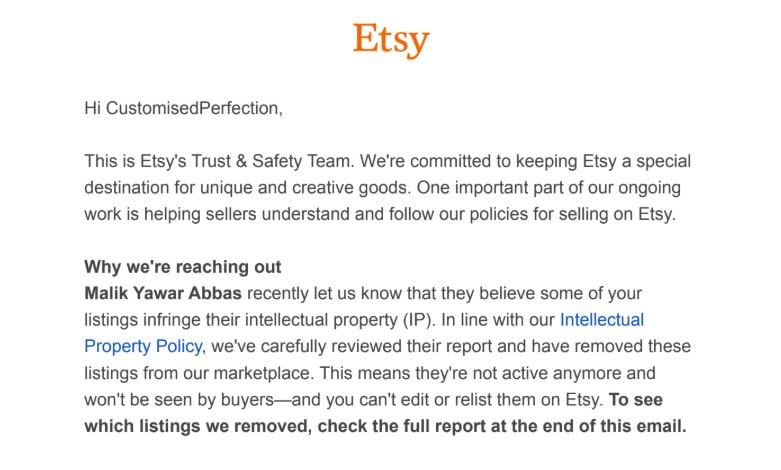
A screenshot of part of an email Etsy sent to Karam, notifying him that some of his designs were taken down following a report by Malik Yawar Abbas, who holds a trademark on the term ‘bruh.’ (CBC)
Karam claims that Abbas, the trademark owner, is “squatting” on the trademark, intending to profit by licensing the word rather than creating his own products. Some legal analysts argue that it is the responsibility of online platforms and the judicial system to better guard against such misuse of trademarks.
No clothes for sale, request for payment
A trademark for the term “bruh” was issued by the Canadian Intellectual Property Office (CIPO) in July 2025 for various clothing items, as per the government’s trademarks database. Additionally, another trademark for the same term was recently granted to Abbas for promoting restaurant services.
In a response to CBC News, CIPO did not address inquiries regarding the “bruh” trademark but mentioned that each trademark application is “examined on a case-by-case basis.”
After his listings were taken down, Karam discovered the trademark holder’s website and was astonished to find a section explaining how he safeguards the “bruh” trademark and encourages others to license it for permission to use the term.
“We didn’t create the word; it emerged from the streets, from the internet. Yet, we recognized its potential,” the website states.
The site does not sell clothing but features mock-ups of apparel and products like energy drinks that incorporate the term “bruh.”
Abbas explained to CBC News via email that these images are intended to illustrate “potential commercial applications” of the brand.
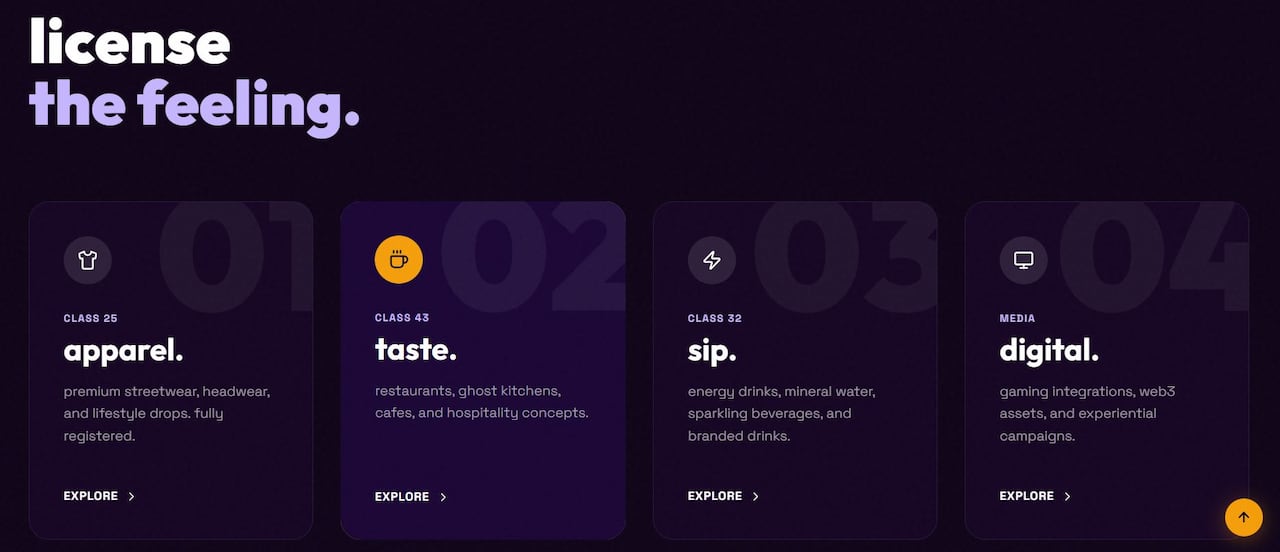
A screenshot of the website advertising the ‘bruh’ trademark. The website prominently advertises options to license the use of the word. (CBC)
When Karam reached out to Abbas regarding the Etsy removals to see if he would retract his complaint, Abbas indicated he would do so if Karam agreed to specific conditions and paid him $1,000.
Karam declined, asserting that the circumstances indicate “trademark squatting.”
“It’s quite disheartening,” Karam mentioned. “When someone promptly demands $1,000 just to retract their complaint, it clearly shows they are acting in bad faith. That’s my personal perspective.”
Abbas communicated to CBC News via email that the $1,000 was a suggested settlement as part of a “negotiated resolution of a disputed trademark matter. It was not paid, and no financial settlement was finalized.”
He also disagrees with the assertion that he is squatting on the trademark.
“BRUH is a legally registered Canadian trademark being developed as a commercial licensing brand,” Abbas stated.
He has since rescinded the complaint to Etsy, which he claims he did after the 11 designs were removed and those items were no longer available to Canadian consumers.
However, Karam believes the “harm has already been done.”
He is currently consulting with an intellectual property attorney and contemplating legal action to challenge the validity of the trademark on grounds of bad faith.
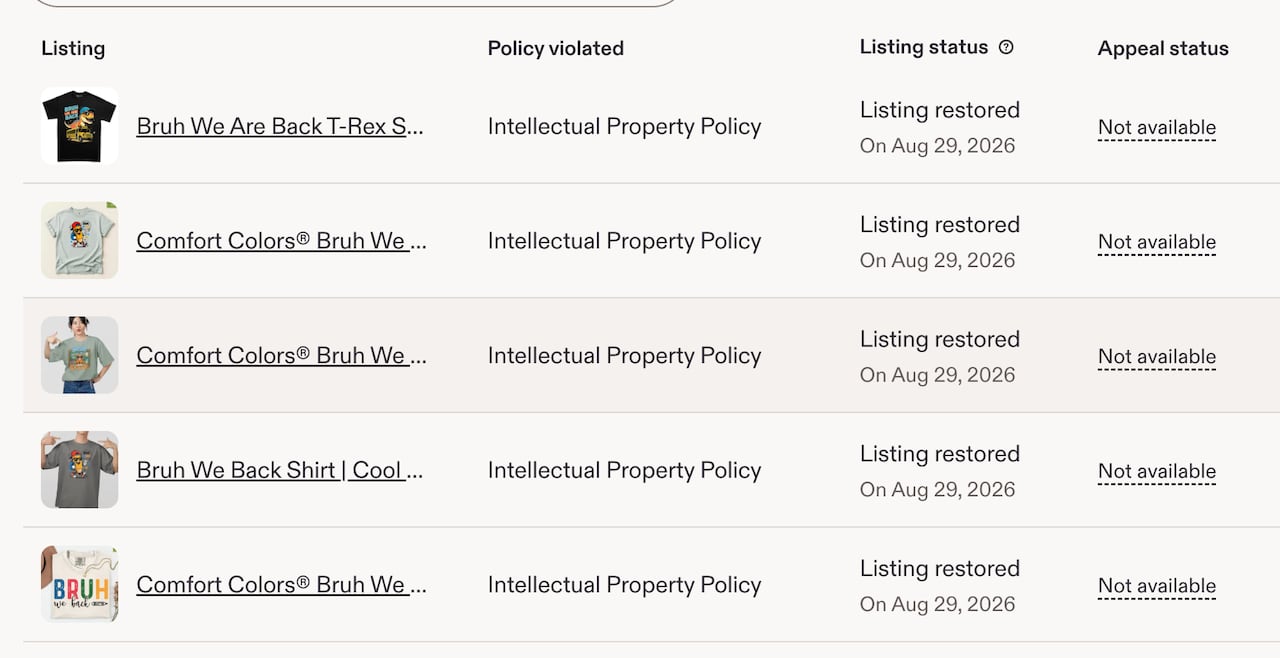
A screenshot of Sam Joseph Karam’s Etsy listings that were reported by the holder of a Canadian trademark for the term ‘bruh.’ (Submitted by Sam Joseph Karam)
Bad faith trademarks can be taken down
According to a relatively recent addition to Canada’s trademark laws implemented in 2019, a trademark can be canceled if it was registered in “bad faith,” as explained by Carys Craig, a professor at York University’s Osgoode Hall Law School who specializes in intellectual property law.
While instances contesting bad faith have emerged, she mentions that this aspect of the law remains somewhat untested, leaving uncertainty about how a court might rule in this scenario.
Craig indicates that licensing can be a legitimate means of utilizing a trademark. Overall, she suggests that the manner in which the “bruh” trademark is being presented online, in conjunction with the requests for takedown orders, may suffice to meet the criteria for bad faith.
“We just don’t have a clear picture of what that entails yet.”
Abbas told CBC News that he trademarked the term to create a “licensing-only brand at a time when there was no BRUH-named brand in Canada,” and disagrees that “protecting, enforcing, or commercially developing” the brand should be viewed as bad faith.
“If there is a legitimate disagreement regarding the validity, scope, or infringement of the registration, Canadian law provides avenues and forums to resolve these matters,” he stated.
Does a trademark mean you own a word?
Even though widely used, general terms and phrases from popular culture can be trademarked — the specifics hinge on the context, according to Craig.
The purpose of a trademark is to distinguish one brand’s products or services from another’s, she elaborates. For instance, the word “apple” cannot be trademarked for selling fruit as it merely describes the item, but it can be effectively trademarked for computers.
There are additional criteria considered in the trademark application process, but Craig asserts that since “bruh” does not describe the product in this case, it could reasonably serve as a trademark.

Osgoode Hall Law School professor Carys Craig, who specializes in intellectual property law and technology, says it’s up to the courts to decide if the way the ‘bruh’ trademark is being used could be seen as bad faith. (Alexis Raymon/CBC)
However, acquiring a trademark does not grant complete ownership of a word, and experts argue that the “bruh” apparel on Etsy might not necessarily constitute infringement just because it features the term.
Paula Clancy, an intellectual property law partner at Gowling WLG, notes that for courts to ascertain if infringement occurred, they would evaluate how the alleged infringer was employing the trademark — whether as an indication of origin, to create the impression that it was from a specific brand, or in an ornamental context as part of a design.
T-shirts with phrases such as “Bruh, we back,” which Karam had removed, “might indeed fall within those exceptions,” Clancy pointed out — suggesting they may not infringe.
Despite this, Karam states that Etsy did not provide him with a means to contest its decision to remove the listings.
For his part, Abbas claimed he reported the listings to Etsy when he “reasonably believed” they might infringe upon his trademark rights, asserting that he never aimed to “stop people from using the word in normal conversation or everyday language.”
In a statement to CBC News, an Etsy representative mentioned that the platform evaluates and removes products upon receiving valid notices of infringement and emphasized that sellers are accountable for adhering to all regulations and site policies. The spokesperson advised sellers to reach out to the individual who submitted the original complaint if they believe their listing should not have been taken down.
Clancy acknowledges the reasons why platforms like Etsy take trademark removal requests seriously but argues that a policy lacking an appeals process creates difficulties for sellers who may be reluctant to incur the costs involved in legal proceedings.
Testing boundaries of trademark system
Clancy mentions that cases like this are uncommon in Canada.
“Typically, we observe the opposite scenario, where infringers utilize marks without authorization,” she stated, highlighting that some individuals attempt to benefit from the reputation of established brands.
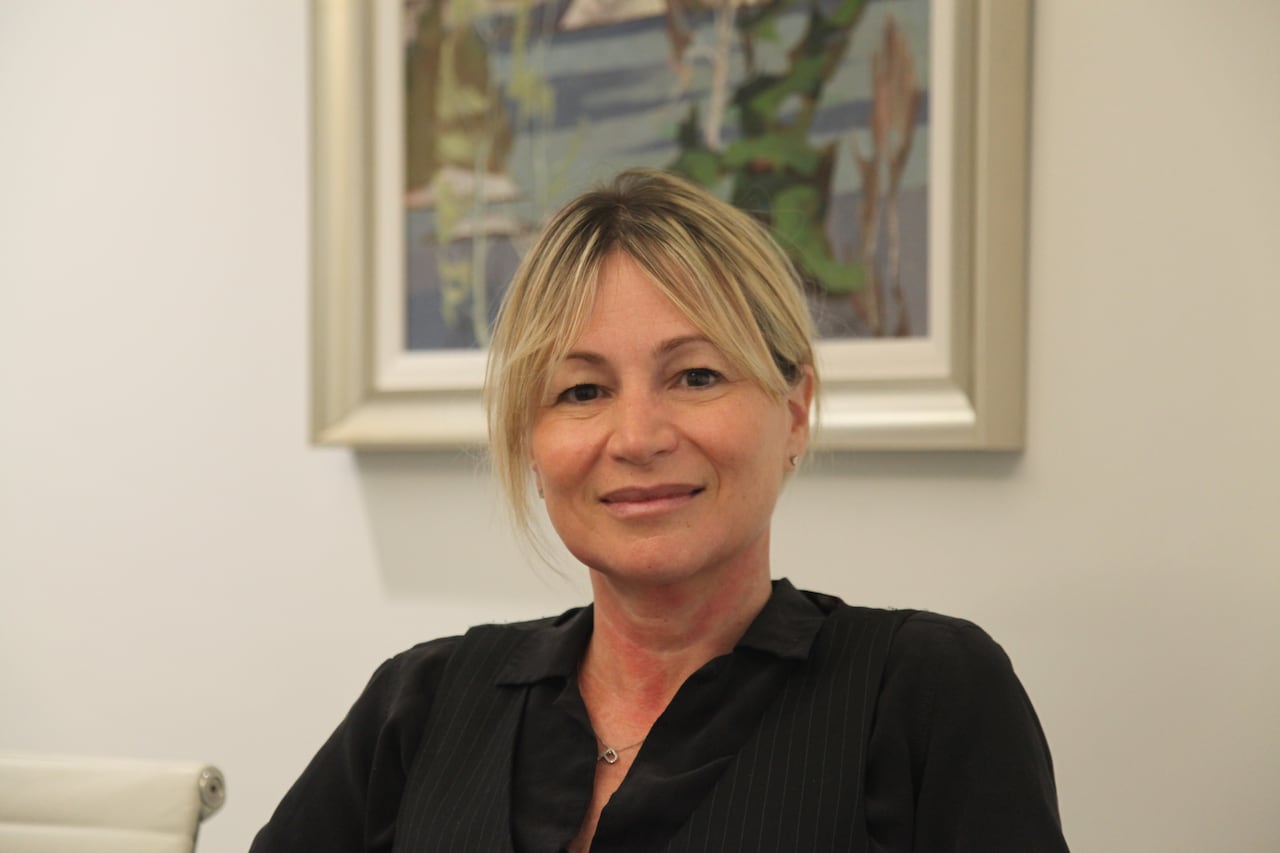
Intellectual property lawyer Paula Clancy says she understands why platforms like Etsy would take down products that are reported for infringement, but says those decisions could be hard for sellers to fight. (Stu Mills/CBC)
Craig expresses concern that due to the high costs associated with trademark disputes, particularly for smaller enterprises, instances of trademark squatting or excessive enforcement may often go unnoticed.
She also emphasizes that despite the protests from Etsy sellers, the trademark owner in this instance has maintained a “careful line” that may still align with legal standards, considering they were granted trademark rights and that licensing trademarks is permissible.
“This situation truly tests the limits of the trademark system and takes advantage of certain policy weaknesses or loopholes,” Craig stated.
She believes stricter regulations may be necessary to avoid these types of situations. Greater diligence could be required during the initial phases of trademark issuance, particularly for trendy phrases that might attract attempts to monopolize them.
Easier avenues for contesting potentially bad-faith trademarks and modifications to online platforms that allow sellers to appeal trademark removals could also prove beneficial, according to Craig.
She described it as a “worst-case scenario” to find oneself in a situation where everything is protected, no disputes are litigated, and “everything is automatically removed as soon as a trademark owner asserts their rights.”