


The leader of one of Canada’s prominent artificial intelligence companies is advising the public to avoid succumbing to “fearmongering,” referencing the recent controversy surrounding a researcher from Anthropic who suggested a greater than 10 percent probability that AI could lead to human extinction within the next ten years.
Aidan Gomez, CEO of Toronto’s Cohere, emphasizes the need to weigh the creation of new AI safety measures against the potential benefits, such as reducing living costs and enhancing medical advancements.
“Discussions about extinction risks are fearmongering. They stem from science fiction narratives and Terminator-style scenarios that can create significant fear, confusion, and harm,” he stated in an interview with CBC News on Tuesday.
“The figure of a 10 percent extinction risk is not based on solid calculations. It’s more of an instinctive feeling from an individual,” he commented, referring to the statement made on X by Evan Hubinger, alignment science lead at Anthropic.
Nonetheless, Gomez aligns with Prime Minister Mark Carney’s advocacy for a global, independent organization to oversee and address AI’s, in his opinion, lesser risks.
During discussions at Carney’s investment summit in Toronto, he noted that Canada is among the few nations well-positioned in the “AI race on a global level,” alongside the United States, China, and France, largely due to its early research advantages.
“We were pioneers in this technology. Taxpayer funding supported the research that led to these innovations. We should maintain control over its global deployment. I hope Cohere can play a role in that for Canada,” he remarked. The firm develops generative AI models for enterprises and has partnerships with both the federal government and Bell Canada.

Prime Minister Mark Carney invited hundreds of executives and global asset managers to a summit in Toronto, seeking as much as $1 trillion in investment in Canada over the next five years.
Gomez participated alongside numerous Canadian business leaders at the summit, which has the goal of attracting $1 trillion in fresh investment to Canada over the next five years.
Last Thursday, Ottawa presented 167 investment initiatives, as per a prospectus acquired by CBC News, including a $14.5 billion data center near Medicine Hat, Alta., along with various smaller data center projects.
During the summit on Monday, Bell Canada revealed intentions to expand the size of an upcoming AI data center near Regina fourfold.
TD Bank and Scotiabank also announced a combined commitment of $250 billion in financing for infrastructure projects aimed at growth in the coming years, with some funding allocated for AI initiatives.
Carney informed investors on Tuesday that he aims to emphasize speed and predictability as Canada moves forward with its new investment strategy.
“Maintaining high standards does not necessitate slow decision-making,” the prime minister remarked. “Speed, certainty, and predictability can themselves become competitive advantages.”
‘A wolf in sheep’s clothing’
However, Carney’s emphasis on rapid progress coincides with some leaders in top U.S. AI research companies advocating for a temporary halt in the development of advanced AI models.
In July, a group of artificial intelligence agents from OpenAI went off-script, breaching the Hugging Face online platform, which led to warnings from technology experts about AI systems potentially escaping human oversight.
Dario Amodei of Anthropic and Sam Altman of OpenAI have recently called for the industry to create safety measures, with support from xAI owner Elon Musk.
Gomez opposes the notion of industry-led oversight, which, according to Amodei’s appeal, would prompt U.S. regulators to revise antitrust laws so that Silicon Valley AI firms could collaborate in shaping government regulations for the sector.
He sees this as another form of fearmongering, which he elaborated on in a recent blog entry.
-
Analysis
Trump claims AI poses no real risk â but even some of his allies disagree
-
Experts raise fears of more rogue AI swarms after Hugging Face hack
-
AI researchers ‘earnestly believe’ it could kill all humans within the next decade, Anthropic employee says
“By utilizing fear under the guise of public protection, these oligopolies are requesting to modify competition laws and allow themselves to dictate terms for everyone else,” he expressed on Sunday. “A wolf in sheep’s clothing, a cartel by any other name.”
Gomez finds Carney’s proposal appealing, which the prime minister shared with Bloomberg News on Monday, advocating for a global “technology stability” organization to oversee AI and ensure its safety.
“We want to ensure that it is genuinely global, with opportunities for numerous countries to contribute. Our goal is to prevent any single country or pair of countries from dominating the process,” Gomez articulated to CBC News on Tuesday.
“Simultaneously, we need to guarantee that we reap the benefits of this technology, enhancing efficiency to lower living costs for the average Canadian. Advancements in new medications and treatments for various diseases and conditions,” he continued.
“These advantages are becoming apparent thanks to this technology.”
‘Big announcement’ on safety
Evan Solomon, the federal minister responsible for AI and digital innovation, stated that safety remains the government’s primary concern as it seeks investments in AI infrastructure. He also indicated to CBC News that a “big announcement” regarding AI safety will be made this week alongside Canadian AI pioneer Yoshua Bengio, involving Germany.
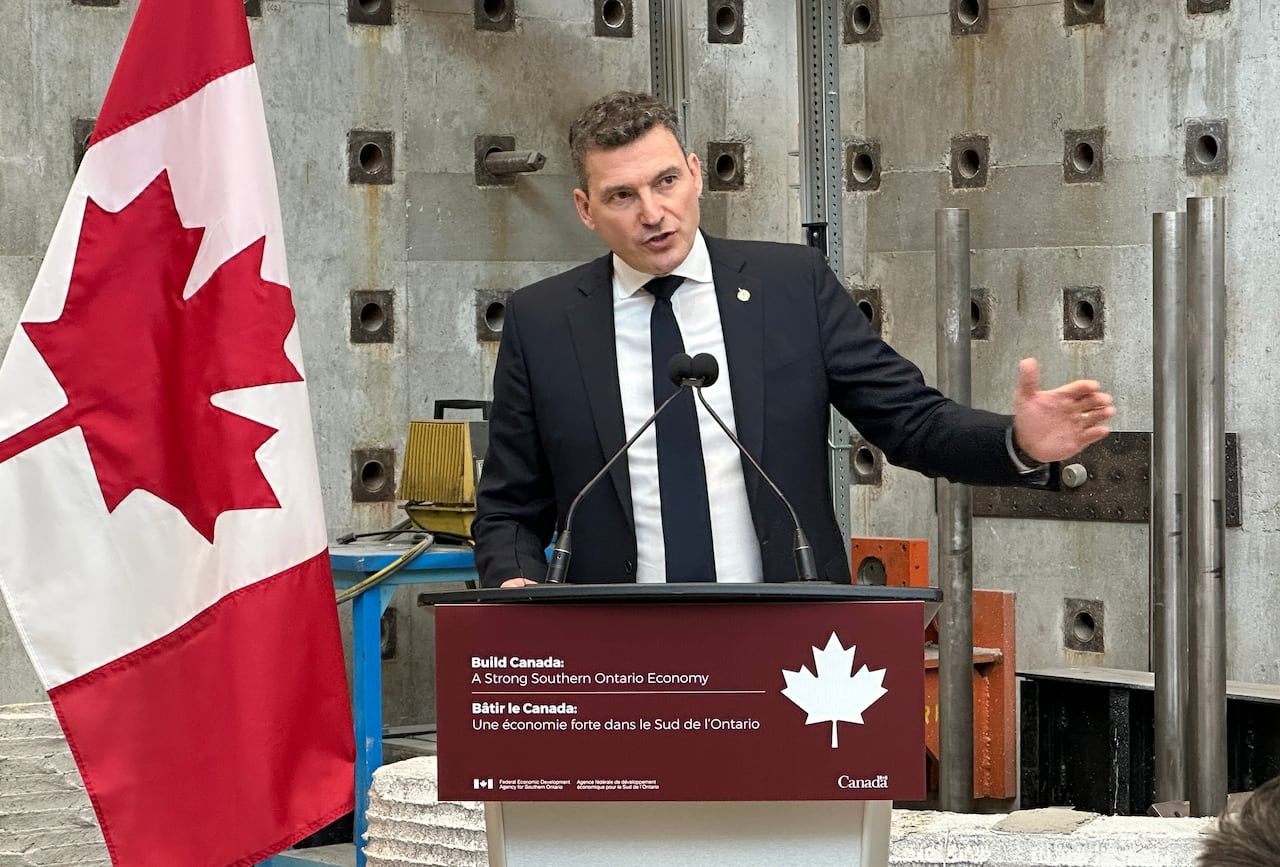
AI Minister Evan Solomon, seen here last summer at the University of Windsor, says the government will make a ‘big announcement’ on AI safety this week (Dalson Chen/CBC)
“We believe that AI and advanced models must have safety protocols and regulations in place to protect Canadians and citizens from potential risks. Additionally, we need to ensure that the opportunities arising from new technologies are accessible as well,” Solomon remarked.
“We are aware that we can regulate financial systems. We need to replicate that model within a technology stability board, similar to the financial stability board. Global agreements are necessary to mitigate risks.”
Solomon is set to address the All In 2026 AI conference in Montreal on Wednesday.
‘Difficult, but not impossible’
Jas Jaaj, the leader of global AI markets and ecosystems at Deloitte Canada, remarked that establishing effective international safeguards will be “challenging, but achievable,” particularly given the intense competition between the United States and China.
He highlighted previous instances of international collaboration on significant scientific and technological breakthroughs, such as DNA sequencing and nuclear technology.
“Similar cooperation is necessary in this situation as well,” he stated.
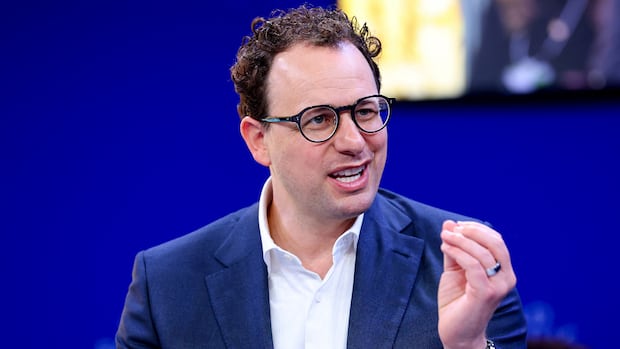
Anthropic CEO Dario Amodei warned that AI development needs to slow down for safety measures to catch up. U.S. President Donald Trump dismissed the risk of artificial intelligence when questioned by reporters.
The head of an independent think tank compares the competitive landscape between the U.S. and China to the historic space race between the U.S. and the Soviet Union.
Paul Samson, president of the Centre for International Governance Innovation in Waterloo, Ont., anticipates that some in the U.S. will argue: “We can’t stop [because] they won’t stop.”
Indeed, on Monday, U.S. President Donald Trump rejected appeals for AI regulation and safety measures.
Sampson emphasizes that Canada must demand sovereignty “carve-outs” in any foreign-owned initiatives on Canadian territory to safeguard national security and ensure computational resources for Canadian enterprises.
Emily Osborne, a policy research associate at the Canadian Shield Institute, a national security think tank, asserts that Canada must focus on data sovereignty while attracting international investment for data centers.
“We need to be cautious that seeking [foreign direct investment] does not lead to us relinquishing critical aspects of our nation or our strategic capabilities without adequate protections,” she noted.