

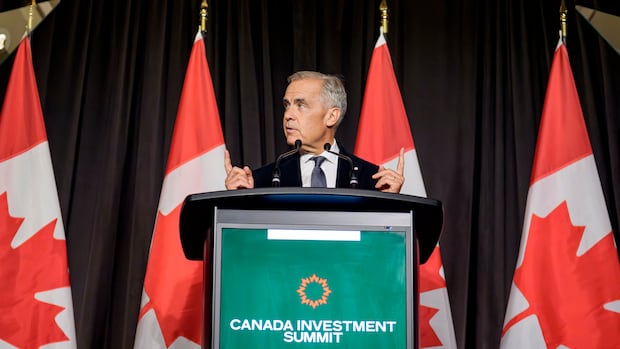

A multitude of wealthy investors have gathered in Toronto for the inaugural Canada Investment Summit.
Kicking off with a reception on Sunday, the summit seeks to unite international investors with Canadian business leaders, aiming to stimulate $1 trillion in investments across the nation within the next five years.
Prime Minister Mark Carney, a former central banker and leader of Brookfield Asset Management, is well-acquainted with prominent investors. However, the stakes are considerable, as the intensifying Canada-U.S. trade conflict has increased the urgency to build new partnerships and demonstrate that Canada is an attractive investment hub.
So, who is attending the summit, and what must Canada do to secure funding for its major initiatives? Here’s what you should know.
Who’s attending?
According to previous reports from CBC News, Carney extended invitations to 100 of the most significant investors worldwide. While the government has not disclosed the complete guest list, several high-profile names are believed to be included.
Among them are Larry Fink, chairman of BlackRock Inc., the largest asset manager globally based in the U.S., and Dilhan Pillay, CEO of the Singaporean investment firm Temasek. Representatives from substantial sovereign wealth funds, such as Norway’s government pension fund and state-owned enterprises like the Abu Dhabi National Oil Co., will also be present.
“It’s essentially a gathering of key figures in the investment arena,” noted Jeremy Kronick, president and CEO of the C.D. Howe Institute, an economic think tank, with numerous banks and investment managers from both Canada and abroad expected to join.
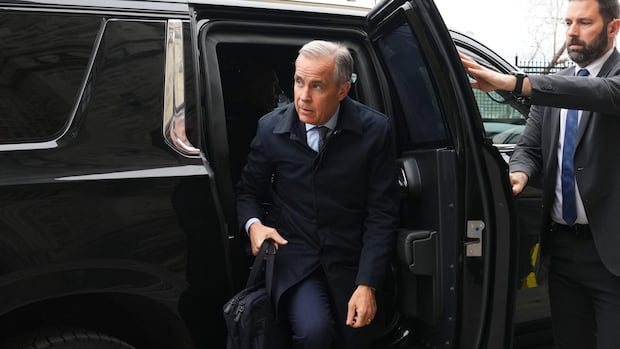
Prime Minister Mark Carney is inviting 100 of the world’s biggest investors to a summit in Toronto in September, where he will pitch Canada as a reliable place for investment.
The guest list for the reception on Sunday evening also included top executives from various Canadian firms, along with American business leaders, such as those from Air Canada, artificial intelligence firm Cohere, Enbridge, and Alto, which is planning a proposed high-speed rail link connecting Toronto and Quebec City.
Numerous Canadian politicians, including several provincial premiers, were also present.
What initiatives are being proposed?
A total of 167 projects, including a proposed pipeline transporting oil from Alberta to British Columbia’s coast and advancements in satellite technology for Earth observation, are among the investment opportunities highlighted in a 66-page prospectus acquired by CBC News.
The prospectus categorizes these projects into eight groups: 11 conventional energy initiatives, 31 clean energy projects, 63 in mining and metals, 16 focused on marine and port infrastructure, 11 related to power and utilities, 10 in digital technology, 19 in advanced manufacturing, and six transportation projects.
More than half of these projects pertain to energy and mining, indicating where the government’s focus lies, according to Kronick.
Some of the most notable and costly projects on the agenda include a $35 billion pipeline to British Columbia, approximately $79 billion for the Port of Churchill expansion in northern Manitoba, and the proposed $28.5 billion Ksi Lisims liquid natural gas terminal on the British Columbia coast.
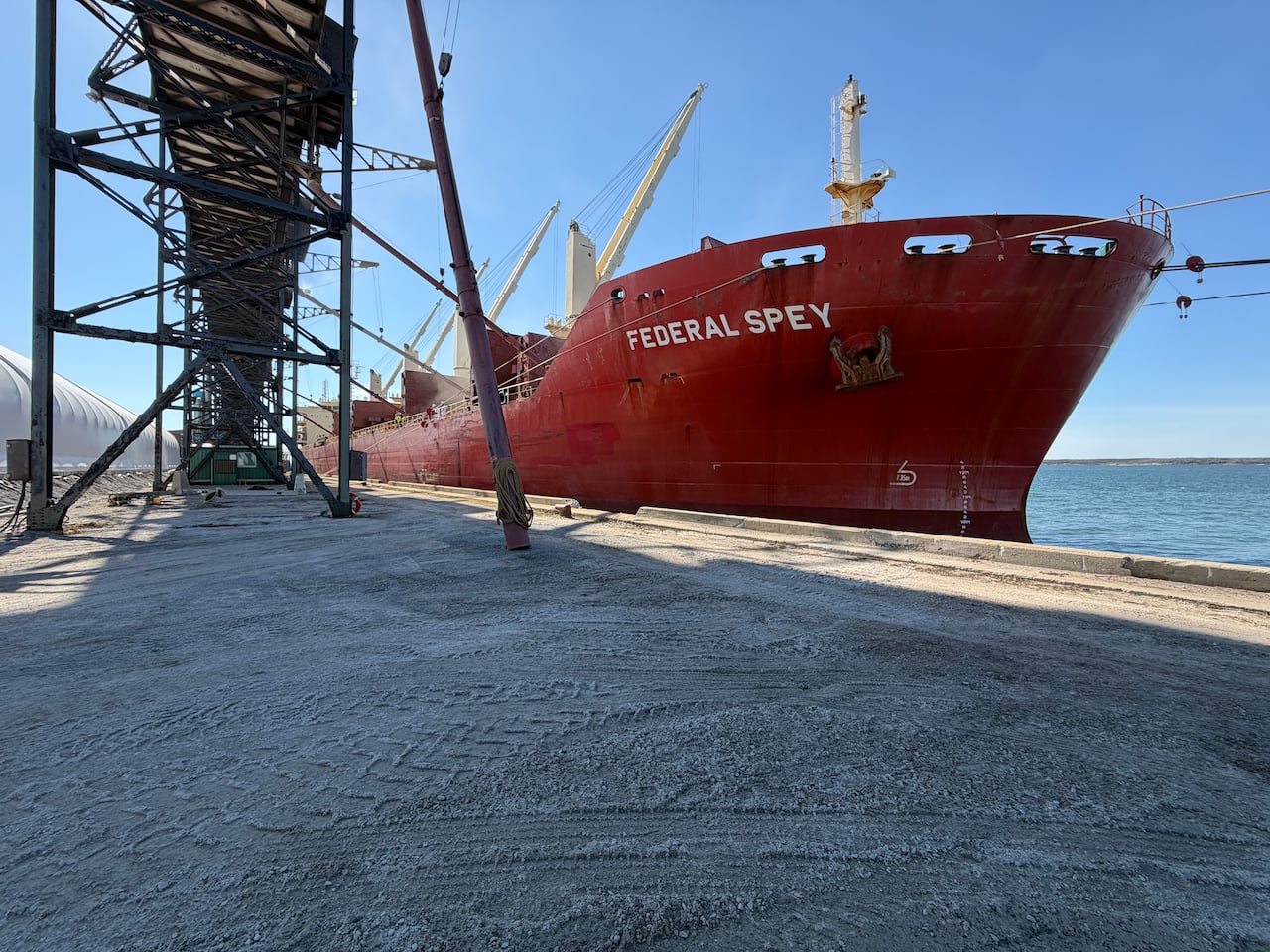
A grain vessel is docked at the Port of Churchill on Aug. 31. Expanding the northern Manitoba port is one of some 167 projects on the table at this week’s summit. (Josh Crabb/CBC)
Why is this important?
The objective is to present Canada as a “compelling investment destination,” as described by the government, despite the fact that this has not always been the case.
Kronick points out that lengthy approval times for significant projects and uncertainty regarding their approval have previously deterred some international investors from pursuing Canadian opportunities.
A recent study by the CPP Investment Insights Institute— the research division of the firm guiding the summit — gathered insights from 65 global institutional investors regarding their views on various developed nations.
Canada ranked highest for stability and regulatory predictability, with investors identifying opportunities in the country’s critical minerals, energy, and other resources. However, regulatory complexity and permitting processes raised significant concerns, particularly among those interested in mining and energy projects, according to the report.
Given Canada’s status as a smaller economy, Kronick emphasizes that more efforts are needed to elevate its competitiveness compared to other developed countries. Hosting a summit like this — to convey the country’s commitment to major developments — marks a positive step forward.
“I believe the shift in tone is a welcome change,” Kronick stated. “It has been absent in recent years.”
He asserts that business leaders must demonstrate Canada’s seriousness regarding the significant projects at hand, ensuring the necessary manpower and resources are in place for their rapid execution.
Even if agreements do not materialize quickly, Kronick believes that any forthcoming deals could substantially enhance Canada’s productivity and GDP.
If the government manages its strategy effectively, a report from TD Bank forecasts that Canada could experience an investment “supercycle” lasting a decade or more, generating jobs and increasing real output per capita by $12,000.
Why seek foreign investment?
However, some individuals express concerns that foreign investments could grant international companies excessive control over Canadian projects.
Federal NDP Leader Avi Lewis has criticized Carney’s investment summit as a strategy to “save this country by selling it off.”
A counter-summit protest is also organized to coincide with the event. Organizers contend that the government plans to “auction off” public resources in any agreements made with external firms.

NDP Leader Avi Lewis tells Power & Politics that he’s calling on the federal government to put export taxes on Canadian energy and critical minerals as the trade war with the U.S. heats up.
Moreover, not all foreign capital is equivalent, asserts Walid Hejazi, an economics professor at the Rotman School of Management in Toronto, specializing in foreign investment.
He explains that there are always perceived risks associated with external investments; concerns that these companies may seek to exert significant control over production and strategic decisions related to those investments. Public sentiment tends to worsen when investments pertain to projects viewed as strategic — such as critical infrastructure or national security — as opposed to those deemed merely commercial.
-
Exclusive
Carney’s pitch to unlock trillions in global investment
-
From pipelines to railways and AI: Ottawa pitches 167 projects ahead of Carney’s investment summit
However, Hejazi asserts that the government can establish terms that safeguard Canada’s sovereignty in any potential agreements. He also notes that there is no evidence indicating that foreign companies are more likely to bypass regulations, highlighting that Canada possesses robust laws and institutions to address such issues if they arise.
Additionally, he emphasizes that Canada lacks the financial resources to independently fund all these substantial projects. In the current landscape, particularly where Canada’s relationship with its primary trading partner is strained, Hejazi believes the urgency to cultivate new international relationships is clear.
“We need to expand our global presence,” he stated.
However, “we also want Canadians to feel that our sovereignty is not being compromised by foreign nations.”
He adds that should any agreements arise from the summit, the government must be transparent regarding the terms, clarifying how they benefit Canada to mitigate skepticism.