

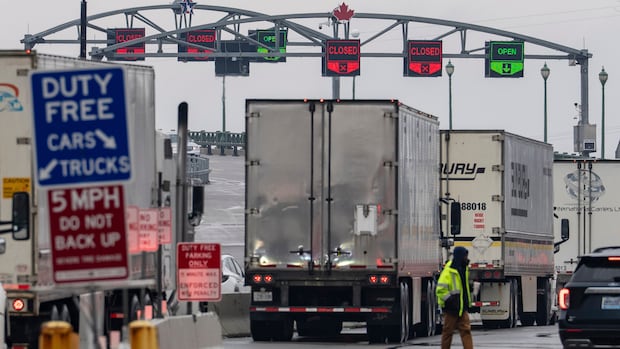

Under the Trump administration, enforcement on cross-border cargo has significantly intensified, leading to increased costs and delays, according to shippers.
With the rise of tariff barriers along the 49th parallel, professionals in the transport sector report that freight inspections and penalties have surged as part of a stricter customs approach in a more protectionist U.S. environment.
“It represents a substantial change,” stated Breanna Leininger, who oversees U.S. operations at Pacific Customs Brokers, located in Vancouver.
She noted that the border authorities’ requirements for documentation concerning the goods she ships have increased tenfold compared to a few years ago.
“We are witnessing a significant shift in the number of entries where customs is conducting more thorough examinations. In the past three to five years, we might have encountered a few such cases in a quarter, but now we experience multiple instances daily,” said Leininger, who manages 5,000 clients sending goods across the border.
To demonstrate adherence to product classifications and trade agreements, importers are increasingly required to submit extensive documentation, including labor and manufacturing records, with the standards of proof and the items subject to tariffs appearing to vary monthly.
“The criteria are continually changing. The information requested is in a constant state of flux,” Leininger remarked.
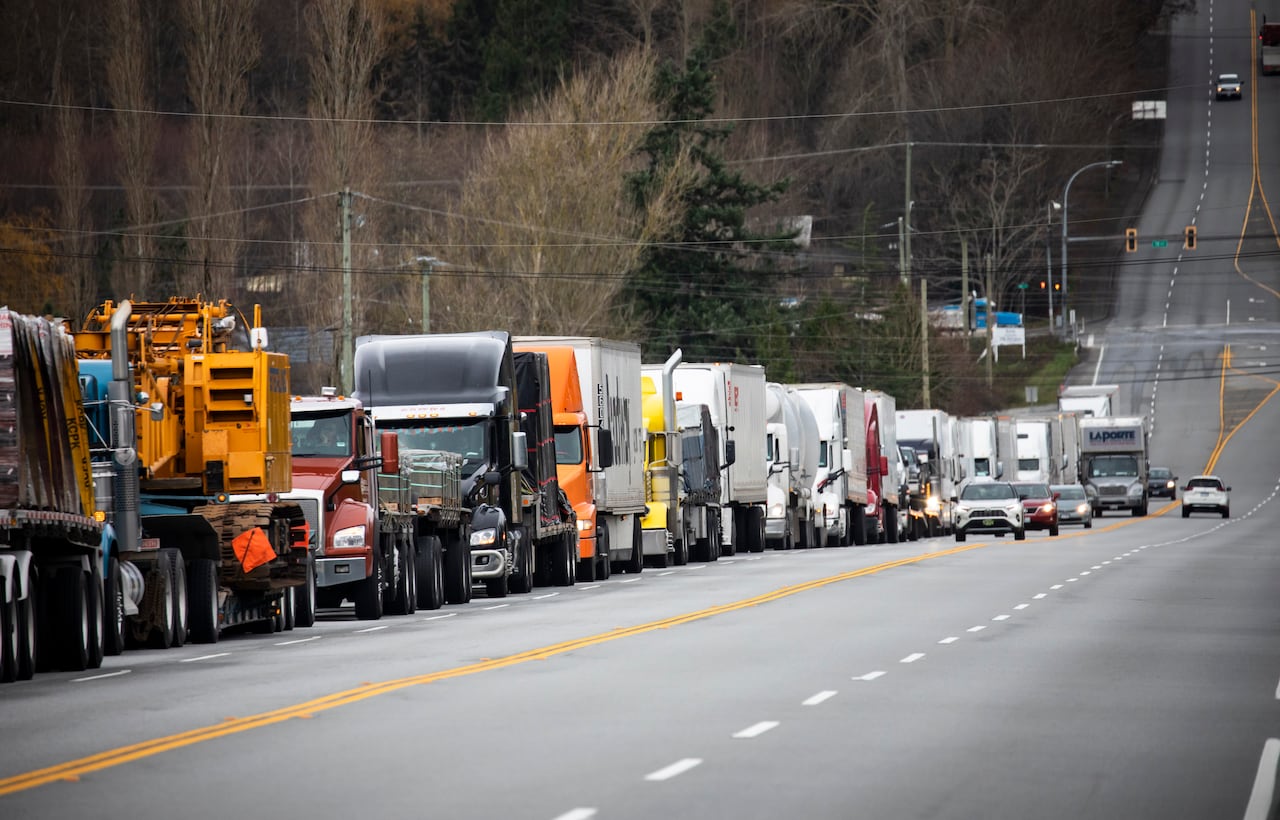
Commercial trailers wait to enter the U.S. at a border crossing in Surrey, B.C., on Dec. 1, 2021. (Ben Nelms/CBC)
Statistics support her claims regarding the stringent enforcement.
According to U.S. Customs and Border Protection data, the number of audits for this year is set to increase by 26 percent compared to 2024.
An audit involves reviewing an importer’s records to ensure compliance with tariff classifications, customs valuations, and agreements under free trade pacts like the Canada-United States-Mexico Agreement.
In just the first half of this year, U.S. customs officials collected $70.6 million US from various trade penalties by late July, marking a 169 percent increase from the total amount for all of 2024.
This six-month total also reflects a 53 percent rise compared to the entirety of 2025.
Escalating trade war
The heightened enforcement coincides with an escalating trade conflict between Canada and the U.S., with both nations imposing new tariffs in recent weeks.
Delays at the border and the additional time required to gather product documentation contribute to increased expenses and may, in some instances, hinder cross-border trade.
“It results in substantial additional costs. Storing goods in a warehouse can amount to thousands of dollars,” noted Alan Dewar, executive vice-president at GHY, a customs brokerage in Winnipeg.

“Drivers often find themselves stuck for a weekend or overnight, which adds to the costs. Potential spoilage can occur, and additional service charges may apply if goods do not reach their destination on time,” he added.
-
How big and small grocery stores are preparing for tariffs to hit shelves
-
What will Trump’s retaliatory tariffs do to Canada’s economy big picture? Not that much, economists predict
Leininger added: “While many have managed to adapt, some are giving up due to the overwhelming challenges.”
According to U.S. Customs and Border Protection, the agency “constantly evaluates and modifies its trade enforcement strategies” based on risk assessments, trade patterns, and legal obligations.
“Importers must ensure they exercise due diligence and provide accurate and complete information to CBP,” stated spokesperson Trish Driscoll in an email.