

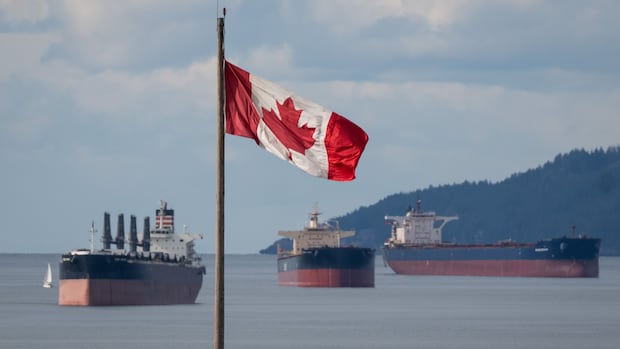

In the first half of 2026, Canadian exports to China surged by 30 percent, contributing to an overall trade increase of 3.6 percent compared to the previous year, as reported by researchers analyzing Statistics Canada data.
The statistics, featured in a recent report by the Canada China Business Council alongside the University of Alberta’s China Institute, seem to indicate a renewed engagement between the two nations, part of Canada’s strategy to diversify its economy amidst strained relations with the United States.
The total trade in goods between Canada and China reached $66.6 billion in the first half of 2026, marking a 3.6 percent rise, with exports climbing to $21.74 billion, reflecting a 30 percent yearly increase.
Energy and minerals were the primary drivers, accounting for 58.4 percent of all domestic exports to China during this period, with energy (primarily crude oil and liquefied propane) experiencing an 81.8 percent increase. Exports of metal ores and non-metallic minerals (including copper ore) saw a 29 percent rise.
Bijan Ahmadi, executive director of the Canada China Business Council, stated, “This represents a record for our exports to China in the first half of the year.”
Although trade between the two countries has persisted through various geopolitical tensions in recent years, this latest increase is likely due to multiple converging factors.
Geopolitics and Trump
Diplomatic and economic relations between Canada and China are improving after years of strain following the 2018 arrest of Huawei executive Meng Wanzhou on a U.S. extradition request.
As recent trade tensions between Canada and the U.S. threaten to extend the divide between Ottawa and Washington, Prime Minister Mark Carney has emphasized Canada’s goal to establish new trade agreements with various nations to reduce dependence on the U.S.
In a video address earlier this month, Carney remarked, “We possess everything necessary to pivot and thrive. That pivot will incur costs. Action always has costs, but they are minimal compared to the costs of stagnation.”
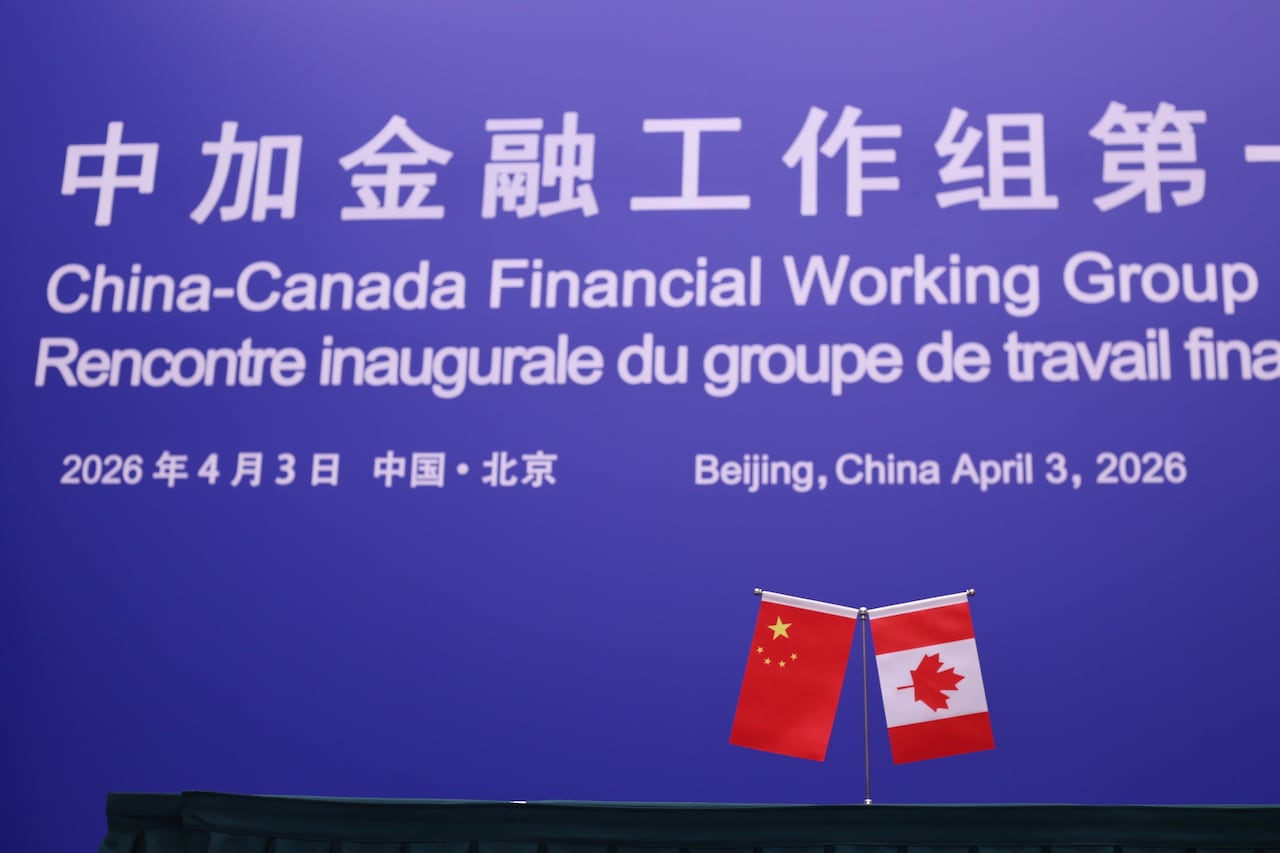
The China-Canada Financial Working Group was established this spring by Finance Minister François-Philippe Champagne during his trip to Beijing. (Lisa Xing/CBC)
Additionally, the Trans Mountain Pipeline achieved 97 percent capacity in June, significantly enhancing Asia’s access to Western Canadian crude oil.
The ongoing U.S.-Israeli conflict with Iran has also contributed to increased oil exports as it disrupted shipments through the crucial Strait of Hormuz, causing oil prices to rise and prompting buyers to seek producers like Canada.
No other nation can match the purchasing power of China.
Anton Malkin, head of research at the University of Alberta’s China Institute, noted, “Our trade exhibits a notable complementarity … despite some significant tensions.”
Mark Maki, CEO of Trans Mountain, recently forecasted that Asia will account for 70 percent of Canadian oil exports by 2028.
Maki stated to Reuters during the APPEC industry meeting in Singapore earlier this month, “As we expand, I anticipate that most of this growth will be directed toward Asia.”
Trade truce
The first half of 2026 could be characterized as a significant transition in bilateral relations. Carney reached an agreement with Chinese President Xi Jinping to permit tens of thousands of Chinese electric vehicles into the Canadian market (with 15,603 having entered thus far) in return for Beijing lifting some tariffs on Canadian agricultural goods like canola meal and peas and reducing tariffs on canola seed.
Andre Harpe, chair of the Canadian Canola Growers Association and a canola farmer near Grand Prairie, Alberta, remarked, “We witnessed an almost immediate increase in prices.”
Harpe noted that during the tariff dispute with China, canola seed prices had dropped to $12 a bushel, but have since risen to $17 a bushel.
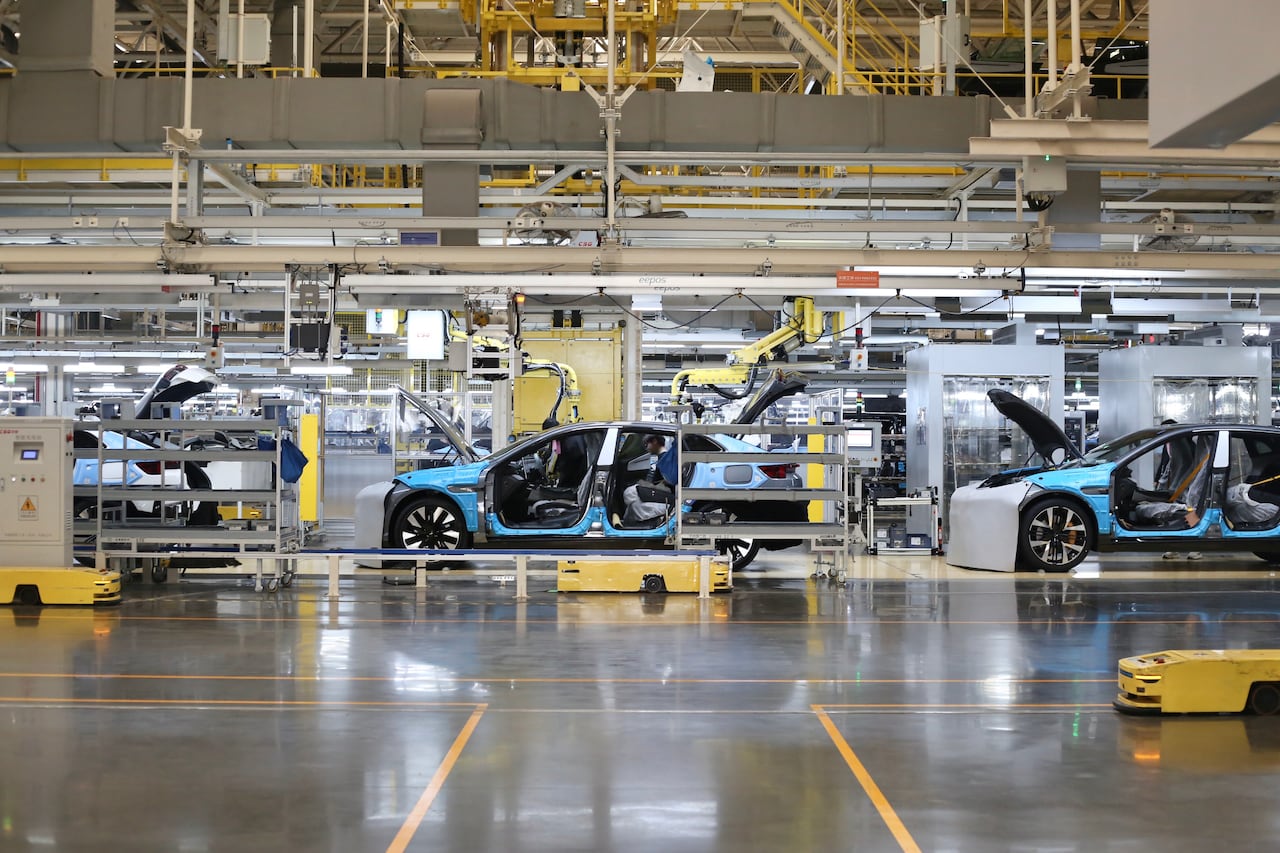
Electric vehicles being assembled at the Zeekr factory in Cixi, China. (Lisa Xing/CBC)
Alberta and British Columbia saw the largest increases in exports, driven by energy, minerals, forestry, and agricultural products.
Canada’s largest port, located in Vancouver, manages approximately 16 percent of the nation’s merchandise trade, with one-third of that trade involving China, and officials indicate that this figure is on the rise.
Peter Xotta, president and CEO of the Vancouver Fraser Port Authority, stated, “The previous sentiment regarding our ability to coordinate effectively seems to be shifting.”
Imports down
Despite the increase in overall trade, the import figures tell a different story, showing a 5.8 percent decline from the previous year, even though China remains Canada’s second-largest supplier of imports.
This downturn has led to a 25 percent reduction in Canada’s trade deficit with China, although Malkin suggests this is partially due to a trend of “certain manufacturing sectors relocating outside of China,” particularly to Vietnam.
Malkin remarked, “It’s a bit premature to draw conclusions, but it’s certainly something to monitor.”
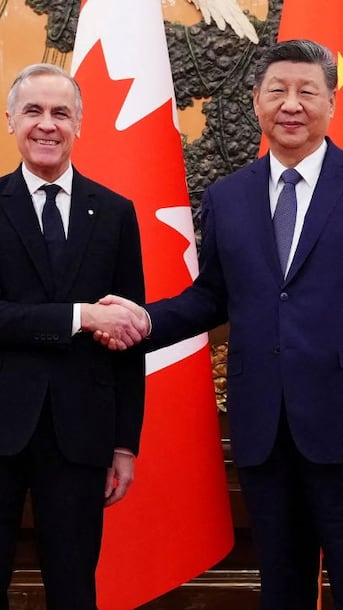
The White House claims “Canada is joined only by the People’s Republic of China in choosing retaliation over negotiation.” Here are the facts about countries imposing counter-tariffs on the U.S.
Ontario experienced the most significant drop in imports, leading to decreased purchases of portable computers and video game consoles, which outweighed gains in lithium-ion batteries and electric vehicles.
Despite the overall trade improvements, the report’s authors indicate that “agricultural performance showed only a modest increase,” at 1.9 percent.
While canola seed, pea, and beef exports rose, lobster exports did not recover, declining by 28 percent.
Malkin remarked, “Canada is a significant lobster exporter, but we are not the sole source for lobster in China.”
Diversify and fortify
Harpe expressed that while the tariff relief has benefited farmers, they are looking to increase domestic sales to lessen dependence on a single trading partner, particularly since the tariff suspensions and reductions with China are only guaranteed until year-end.
The authors of the new trade report point out that Canadian exports to China still fall short of those to the United Kingdom and European Union, and do not reflect “uniform improvement” across all sectors but rather a select range of commodities.
Ahmadi believes there is potential for increased engagement with the Asia-Pacific region, as it encompasses “significant growing markets,” with China accounting for nearly half of the available opportunities for businesses.
He anticipates that year-end statistics will offer a more comprehensive overview.
If the figures from the first half of the year are indicative, Ahmadi asserts that Canada is “well positioned” to meet Ottawa’s target of boosting exports to China by 50 percent by 2030.
“[We might] even exceed that goal,” he added.