


Global temperatures experienced a slight decrease in 2025, raising ongoing concerns about the impact of climate change on communities worldwide. Wildlife faces significant threats due to changing habitats and deteriorating environmental conditions.
Despite these challenges, numerous organizations and activists are dedicated to improving conditions for animals globally. One effective approach involves constructing infrastructure that facilitates the movement of wildlife over or around human-made obstacles.
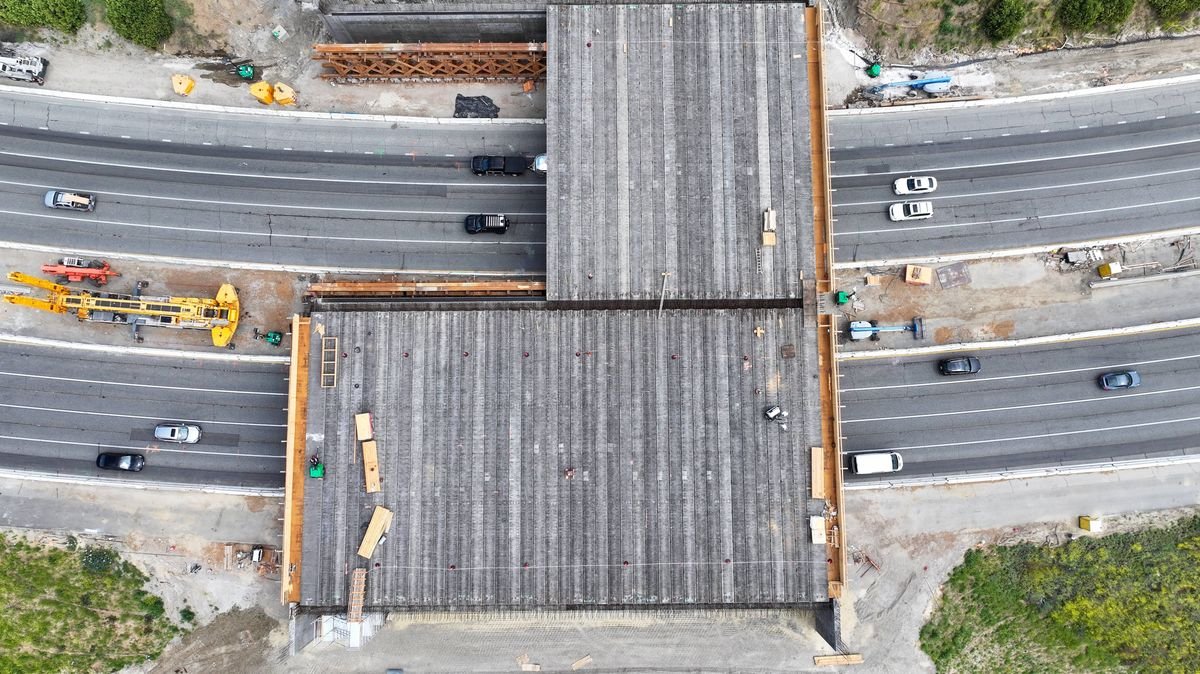
The Wallis Annenberg Wildlife Crossing, currently being built northwest of Los Angeles, is set to become the world’s largest animal crossing upon completion. This £68 million project over the 101 Freeway in Agoura Hills has been in the works for decades.
Construction work began in early 2022, with an initial expectation of opening in early 2026. However, due to weather-related delays, the launch date has been postponed to November 2026. Severe storms in the region caused setbacks, requiring repeated work on the massive supports and surrounding groundwork.
Beth Pratt, a project spokesperson, explained that the storms led to multiple redo attempts due to soil compaction issues during construction. Despite the nearly year-long delay, there is optimism that the crossing will still provide significant benefits for local wildlife, potentially reducing vehicle-caused animal fatalities.
A similar crossing on Interstate 80 near Salt Lake City, Utah, reportedly decreased animal-to-vehicle collisions by 77%. Beth, who also serves as California’s regional director for the National Wildlife Federation, emphasized the importance of finding solutions to protect wildlife populations.
The bridge honors philanthropist Wallis Annenberg, who passed away at 86 years old and played a crucial role in the project. Known for her support of environmental causes, Wallis was also a staunch advocate for science and education initiatives.
Following her death, Wallis’s family expressed their admiration for her unwavering spirit in the face of cancer, highlighting her lasting impact on the community and dedication to preserving wildlife.