

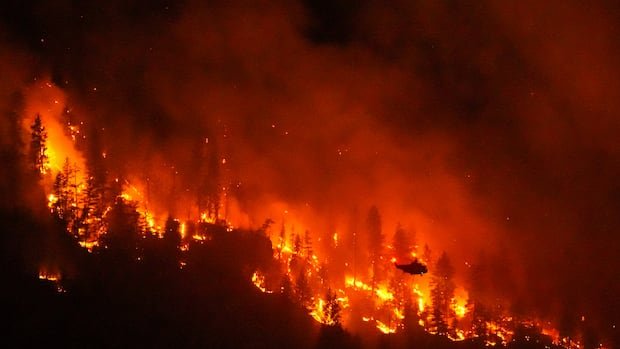

A recent study has shed light on the impact of wildfires, permafrost thaw, and other environmental changes on greenhouse gas emissions. These feedback loops, where climate change triggers additional carbon emissions leading to further climate change, could potentially result in a 20 to 30 percent increase in warming beyond current estimates for this century. Researchers from institutions in the United States, including Stanford University, the Environmental Defense Fund, and Spark Climate Solutions, highlighted these findings in a new paper.
The study, published in the journal Environmental Research Letters, provides a comprehensive overview of warming-induced emissions and their contribution to global temperature rise. It emphasizes the importance of considering these feedback mechanisms in climate models to accurately assess the impact on the environment. The implications are particularly significant for Canada, which is a significant contributor to warming-induced emissions.
Canada, as a northern country, is experiencing accelerated warming compared to the global average. A recent assessment, “Canada’s Changing Climate,” suggests that the country could face up to five degrees of warming in this century, leading to significant changes in ecosystems and landscapes. The study underscores the interconnected nature of climate impacts, noting that changes in Canada can have global repercussions.
The thawing of permafrost, driven by rising temperatures due to global warming, is a key concern. The process of abrupt thawing, exacerbated by factors like wildfires and extreme weather events, releases substantial amounts of carbon stored in the soil. This sudden release of carbon contributes to increased greenhouse gas emissions, further exacerbating climate change.
Furthermore, wetlands, prevalent in Canada, are identified as a significant source of methane emissions. The surge in methane levels in the atmosphere since 2020 has raised concerns about the role of wetlands in contributing to warming-induced emissions. Scientists emphasize the need to include freshwater wetlands in climate models to better understand and mitigate their impact on the environment.
Overall, the study underscores the urgent need for enhanced monitoring and research efforts to quantify and address the complex interactions driving climate change. By acknowledging and addressing these feedback mechanisms, policymakers and researchers can develop more effective strategies to combat climate change and its far-reaching consequences.