

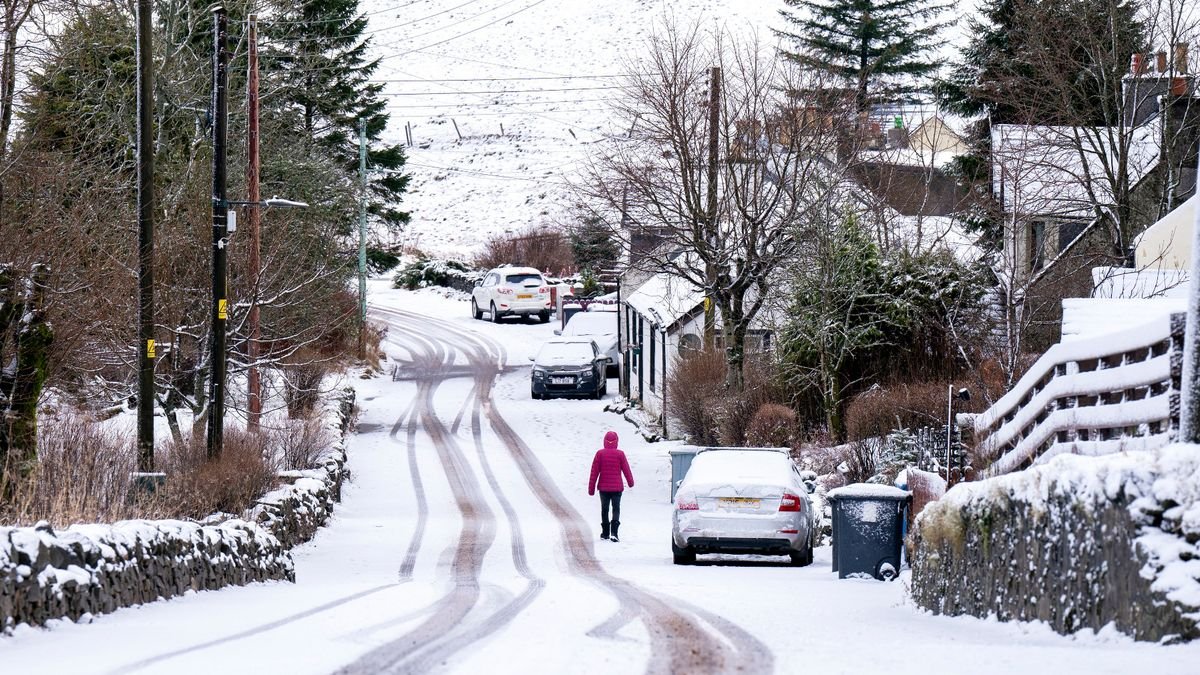

Avalanche alerts have been raised in six regions due to significant snow accumulation that poses a risk of avalanches on mountain slopes. The Scottish Avalanche Information Service has issued a total of six warnings for elevated terrains, including four yellow alerts indicating a ‘moderate hazard’ and two amber alerts indicating a ‘considerable hazard’ in parts of the Highlands.
In the Cairngorms National Park, both northern and southern areas are under yellow warnings, with snowfall and strong gale force winds heightening the potential for unstable ‘windslabs’ that could trigger avalanches into valleys. Glencoe is also under a yellow warning, with more snowfall expected on high peaks and accumulations of up to 20cm possible at the highest altitudes.
Torridon in northern Scotland is facing a yellow warning with snow forecasted above 600m, coupled with south-south-westerly gale force winds that increase the risk of windslab snow instability, leading to potential avalanches. The Lochaber area near Fort William, particularly the renowned Ben Nevis peak, is under the first amber ‘considerable hazard’ warning due to evidence of avalanches occurring in gullies.
Further alerts cover Creag Meagaidh to the northeast of Ben Nevis, with persistent snowfall expected along with freezing levels and strong winds posing risks of avalanches. The Met Office’s long-range forecast for January 19 to 28 predicts colder temperatures returning later in the month, potentially bringing more snow across the country.
Looking ahead to the end of January and early February, the Met Office warns of increased chances of cold conditions affecting parts of the UK, potentially leading to wintry weather hazards at times. Dan Holley, Met Office Deputy Chief Meteorologist, cautions about a deepening low-pressure system moving across the UK on Thursday, bringing heavy rain and possible strong winds, advising to stay updated on the forecast for detailed information.