

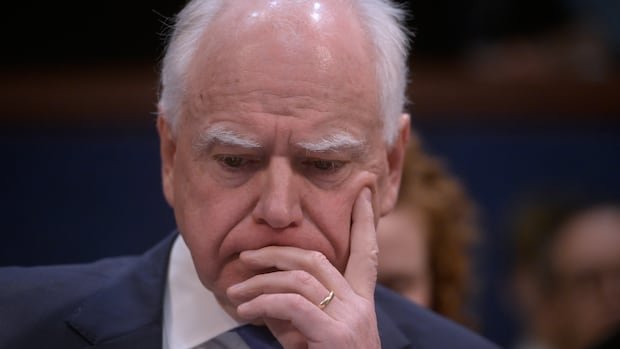

Minnesota Governor Tim Walz announced on Tuesday that the state will not be processing or reviewing permits for proposed mining projects in the Boundary Waters Canoe Area Wilderness. This decision comes four months after the federal ban on mining in the area was lifted by the U.S. Congress and President Donald Trump’s administration.
The Boundary Waters Canoe Area Wilderness spans approximately 240 kilometers along the Minnesota-Canada border within the Superior National Forest, located just south of Quetico Provincial Park in Ontario. It is a popular destination for thousands of outdoor enthusiasts who engage in activities such as canoeing, kayaking, and camping each year.
Governor Walz, a Democrat, emphasized the importance of preserving the wilderness in its natural state, stating that it is the responsibility of Minnesotans to ensure its sacredness and pristine condition.
Although Walz’s executive order is temporary and set to expire in April, the next governor could potentially uphold it. Currently, there are no imminent mining projects in the area, but Twin Metals Minnesota LLC, a subsidiary of Antofagasta Minerals based in Chile, has been pursuing mining operations for copper, nickel, and other metals in the national forest since 2019, claiming they can conduct mining activities without above-ground waste rock storage to prevent potential environmental hazards like acid pollution.
Environmental concerns have been raised regarding the proximity of the proposed mine site to the Boundary Waters Canoe Area, with fears that mining activities could lead to pollution of the waterways.
In April, President Trump signed a resolution approved by Congress that lifted the federal moratorium on mining in the forest, citing job creation and industry growth benefits. Governor Walz’s order prohibits Minnesota regulators from participating in federal environmental reviews related to nonferrous mining activities in the Rainy River watershed, which is connected to the Boundary Waters region.
Furthermore, the state will refrain from conducting environmental assessments or issuing permits for mining proposals while legal disputes over state mining regulations persist. Walz has also called for the drafting of legislation by the Minnesota Department of Natural Resources to ban nonferrous mining in the Rainy River watershed.
Republican U.S. Representative Pete Stauber criticized Governor Walz, accusing him of launching an assault on northern Minnesota and its way of life. Stauber denounced the abrupt dismissal of years of rigorous review processes, environmental studies, and substantial private investments by the governor.
Becky Rom, chairperson of the advocacy group Save the Boundary Waters, commended Governor Walz for his decision, emphasizing the incompatibility of copper mining with the preservation of the Boundary Waters’ ecological integrity and clean water resources.
University of Minnesota law school professor James Coleman noted that Governor Walz’s order introduces uncertainty to proposed mining projects, as federal approval often hinges on state endorsement. Coleman highlighted the prolonged timelines and potential challenges projects may face due to shifting political landscapes at both state and federal levels.