

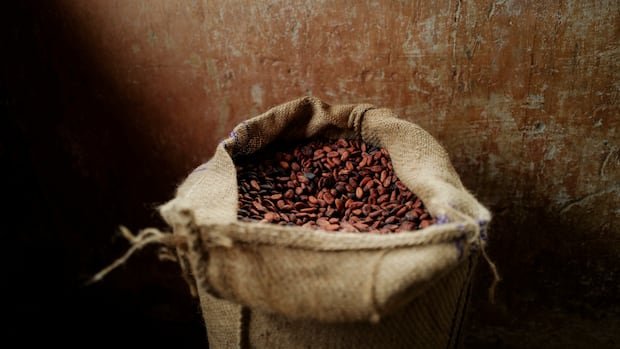

A recent peer-reviewed study reveals a lesser-known threat to cocoa production that goes beyond the commonly acknowledged risks of heat and drought. Lead researcher Anna Lea Albright from Harvard University emphasizes that heavy rainfall poses the most significant weather risk to cocoa cultivation. This revelation comes amidst a surge in cocoa prices, with a tonne now priced around $6,000 US, compared to the previous range of $2,000 to $3,000 US per tonne since 2014, with a peak of over $12,000 US in 2024 due to factors like severe flooding in West Africa.
Leslie Agyare, founder of Three Mountains Cocoa in Ghana, highlights the challenges faced by farmers due to excessive rainfall impacting crop management and harvest. The study, focusing on Ghana as the second-largest cocoa producer globally, identifies extreme rainfall during flowering as a primary factor limiting yields, more so than temperature variations. The research also indicates a clear link between rising temperatures and increased rainfall intensity.
Despite the risks posed by extreme rainfall and other factors like aging trees and illegal mining, there are potential interventions, such as fungicide applications and improved drainage systems, to mitigate the impact on cocoa production. However, the study raises concerns about the future sustainability of cocoa farming in West Africa due to climate shocks and changing conditions, which may lead to a shift away from traditional cocoa-based chocolate products.
Efforts are being made to address these challenges, with companies like Nestlé exploring alternatives such as cocoa-free chocolate made from sunflower seeds. These innovations aim to create a more resilient and sustainable supply chain, considering the growing volatility in cocoa prices and the adverse effects on smallholder farmers in the region. Carodenuto, an environmental governance expert, emphasizes the need for industry adaptation to ensure a viable future for cocoa production and the communities dependent on it.