

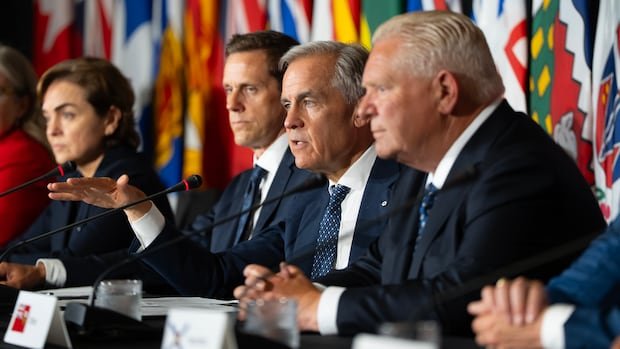

Concerns are rising among Canadian negotiators about the potential imposition of new U.S. tariffs scheduled to be implemented on Wednesday. Ottawa is facing challenges in seeking relief from existing sectoral tariffs while also attempting to convince provinces to lift restrictions on American alcohol, according to sources familiar with the matter as reported by CBC News.
Multiple sources, both from Canada and the U.S., have been briefed on the ongoing negotiations and have been granted anonymity to provide insights into the discussions.
The negotiations are escalating, with Canada-U.S. Trade Minister Dominic LeBlanc engaging in another meeting on Sunday with U.S. Trade Representative Jamieson Greer. This virtual meeting, the third in less than a week, lasted approximately an hour.
Ottawa’s recent objective has been to secure a “comprehensive agreement” with Washington. The desired outcome includes urging the Trump administration to eliminate the impending 50 per cent tariffs, affecting nearly $28 billion worth of Canadian goods set to take effect on Wednesday, equivalent to about five per cent of Canada’s exports to the U.S.
Central to this agreement would be a provision for the Trump administration to reduce the current sectoral tariffs impacting the steel, aluminum, auto, and lumber industries. Presently, steel and aluminum face 50 per cent tariffs, while auto tariffs stand at 25 per cent.

During a speech in Des Moines, Iowa, United States Trade Representative Jamieson Greer emphasized the longstanding trade challenges with Canada, indicating that the current situation is not considered a trade war but emphasized that any retaliatory actions will not be tolerated.
Sources suggest that achieving such a comprehensive agreement, addressing both new tariffs and existing sectoral tariffs, is crucial for securing provincial support. Part of the negotiations includes a commitment to reintroduce American alcohol sales in Canada, which the Trump administration has made a non-negotiable demand.
However, the U.S. has yet to show willingness to significantly reduce the existing sectoral tariffs, leading to substantial gaps between the two countries on critical issues, as highlighted in a report by CBC News on Friday.
Some provinces are adamant