

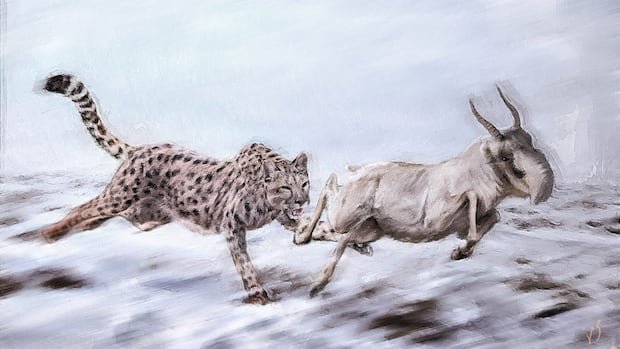

In the Bluefish Caves and a mine site in northern Yukon, bones initially believed to be from an ice-age puma or cougar were re-evaluated through DNA analysis conducted by the University of California. The testing, led by Molly Cassatt-Johnstone, a recent undergrad at the time, revealed a surprising discovery. The bones, which were among her first samples worked on, did not match the expected puma profile but instead belonged to cheetahs.
Grant Zazula, a Yukon paleontologist, vividly recalls the moment he received the unexpected news that the presumed cougars were actually cheetahs. He reflects on the evolution of genetic analysis, noting that what was once considered science fiction is now a routine practice, particularly in studying permafrost-preserved bones from the Yukon.
The identification of a Yukon Miracinonyx, or the extinct American cheetah, marked a significant milestone for Cassatt-Johnstone. She is now the lead author of a research paper published in Current Biology, shedding new insights on the ice-age cat’s dietary habits and habitat range.
The American cheetah was traditionally thought to have adapted to hunting pronghorns on grassy plains, akin to modern-day cheetahs. However, the discovery of these felines in the Arctic tundra posed a puzzling scenario for paleontologists. The absence of pronghorns in Beringia, the land connecting Asia and North America, raised questions about how the Miracinonyx species survived in such an environment.
To unravel this mystery, researchers, in collaboration with Canadian and U.S. partners, employed stable isotope analysis to investigate the dietary patterns of the Yukon cheetahs. The analysis revealed a striking revelation – these felines predominantly fed on fish, a behavior uncommon among historical and contemporary feline species.
Julie Meachen, a paleontologist specializing in Late Pleistocene mammalian carnivores, expressed astonishment at the distinct behavior of the Yukon cheetahs compared to their counterparts in other regions. The abundance of Yukon salmon likely provided an easy food source for these smaller cheetahs amidst competition with larger predators like Beringian lions and bears.
Genetic analysis further revealed that Miracinonyx had closer genetic ties to North American pumas than African cheetahs. The study also highlighted the low genetic diversity within the cheetah population, which may have contributed to their eventual extinction.
Grant Zazula advocates for renaming this unique northern population from ‘American Cheetah’ to ‘Yukon Cheetah’ in recognition of their specialized fishing behavior. He emphasizes the continuous surprises unearthed by paleontologists in the Yukon, showcasing how each bone discovery can unveil a new chapter in the region’s prehistoric past.