

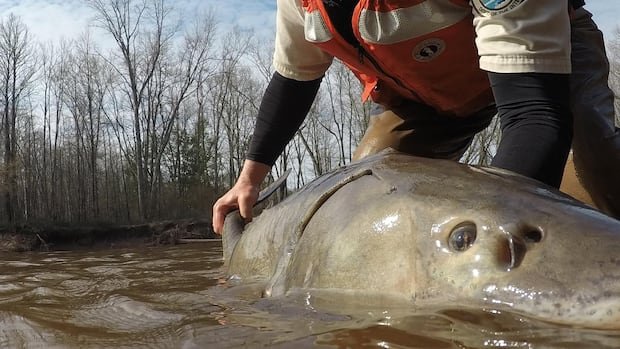

A recent study reveals that some lake sturgeon in the Great Lakes could be over 400 years old, challenging previous scientific assumptions about their lifespan. Despite their potential longevity, these ancient-looking, armored fish are facing endangerment, particularly in the Great Lakes region, where they are listed as a species at risk.
Historically, the lake sturgeon population has suffered a severe decline due to overfishing and habitat destruction, with approximately 99% of the population lost. Efforts to rebuild sturgeon populations include human intervention in raising and releasing young fish to aid in their recovery.
The study, led by Ed Baker, a fisheries scientist with the Michigan Department of Natural Resources, utilized over four decades of data on captured and recaptured lake sturgeon across the Great Lakes. The findings suggest that sturgeon may live much longer than previously believed, with some individuals potentially living for centuries.
Traditional methods of estimating a sturgeon’s age by counting growth rings have limitations as the fish age, leading researchers to develop a new approach. By analyzing the growth patterns of sturgeon over time, researchers were able to model their growth rates and project potential lifespans.
The implications of these findings extend to conservation efforts, with researchers like Trevor Pitcher from the University of Windsor emphasizing the need to reconsider conservation strategies for a species that may live for centuries. The existing century-long conservation plan may need adjustments to account for the extended lifespans of sturgeon.
Lake sturgeon play a crucial role in the ecosystem by controlling invasive species populations. Historical actions by humans, such as overfishing and habitat destruction, have significantly impacted sturgeon populations, highlighting the importance of conservation efforts to restore their numbers.
For indigenous communities like the Nipissing First Nation, lake sturgeon hold cultural significance as elder figures due to their longevity and ancient lineage. The fish’s symbolic importance transcends their ecological role, reflecting their unique status in traditional teachings.
Overall, the study’s findings challenge conventional perspectives on sturgeon lifespan and underscore the importance of adapting conservation strategies to protect these iconic Great Lakes species for generations to come.