



U.S. President Donald Trump is intensifying his efforts to tap into Venezuela’s oil resources, revealing a new agreement designed to enhance production in the South American nation. While Trump is showcasing the prospect of acquiring a controlling interest in a segment of Venezuela’s oil reserves as a signal to Canada, analysts maintain that there is minimal reason for alarm in Western Canada.
An escalation in Venezuelan oil exports to U.S. Gulf Coast refineries could represent a competitive challenge to Alberta’s oil sector, as both regions produce a comparable type of heavy oil.
Venezuela is home to some of the world’s largest underground oil reserves, but the nation grapples with numerous obstacles that hinder production increases, compounded by political turmoil that could derail any efforts to revitalize the oil industry.
Conversely, the Canadian oil sector continues to achieve new production records, alongside various new and expanding pipeline projects at different development stages aimed at enhancing export capacity. Despite the ongoing trade tensions, the U.S. has been increasing its consumption of Canadian oil, which constituted over 60 percent of its crude oil imports last year.
Experts suggest that a significant rise in Venezuelan oil exports remains five to ten years away, which is why the potential threat to Canada is not seen as an immediate concern, according to Grant Sprague, a former deputy energy minister in Alberta.
“If the Americans wish to pursue this, they will need to invest considerable time and money,” Sprague remarked about the agreement between the U.S. and Venezuela.
“One thing we do know is that we are still lacking in information,” he noted.
The recent ‘agreement’
On Friday, Trump took to social media to declare that his administration had secured a deal with Venezuela to gain majority ownership of a fifth of the country’s oil reserves. As part of this arrangement, the U.S. will hold a direct equity interest in a private entity run by a Venezuelan entrepreneur.
Trump characterized the deal as a substantial boost to the U.S. oil supply, allowing for majority control over 65 billion barrels of oil reserves. Concurrently, Venezuela’s interim president Delcy Rodríguez stated that the agreement would attract tens of billions of dollars in investments while upholding the country’s “ownership and sovereignty” over its natural resources.
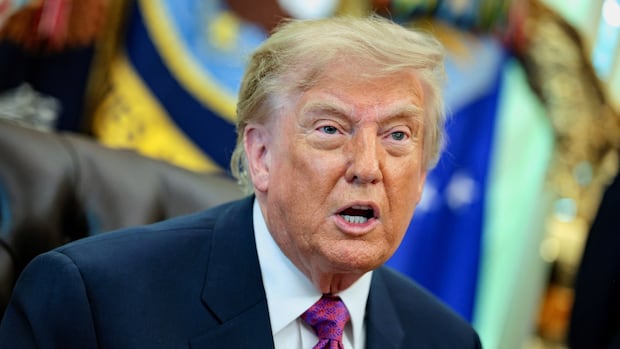
In a post on his Truth Social platform, U.S. President Donald Trump announced a deal that would allow the United States to control more than 65 billion barrels of Venezuelan oil.
According to Al Salazar, an analyst from Calgary with Enverus, an energy analytics firm, these two statements present “quite a bit different” narratives.
“There seems to be some inconsistency regarding the situation. It does raise questions,” he commented. “No one is yet aware of the specific terms.”
This uncertainty is part of why Canadian oil executives are monitoring the developments but are not overly concerned. They prefer to see tangible advancements in rejuvenating the struggling Venezuelan oil sector before reacting.
“Prove the production first before anyone takes action,” he remarked regarding the sentiment in the Canadian industry.
The Trump administration has been urging American oil and gas leaders to invest in Venezuela’s energy sector, following a military operation that captured former president Nicolás Maduro in January.
Oilsands poised for growth
The bulk of Canada’s heavy oil production originates from the oilsands in Northern Alberta, where industrial operations generate millions of barrels daily, making it one of the most cost-effective sources of oil in North America.
A significant benefit of the oilsands is that the multi-billion dollar facilities are already operational and continuously upgraded, according to Alex Filstein, a technology developer and reservoir engineer in the oilsands.
“We don’t have to invest further in infrastructure. We simply produce that oil. We operate those facilities. Canada has political stability and a very low cost of supply,” said Filstein, who serves as the chief technology officer at Watercut Inc.
This contrasts sharply with Venezuela, where production peaked at 3.7 million barrels per day in 1970.
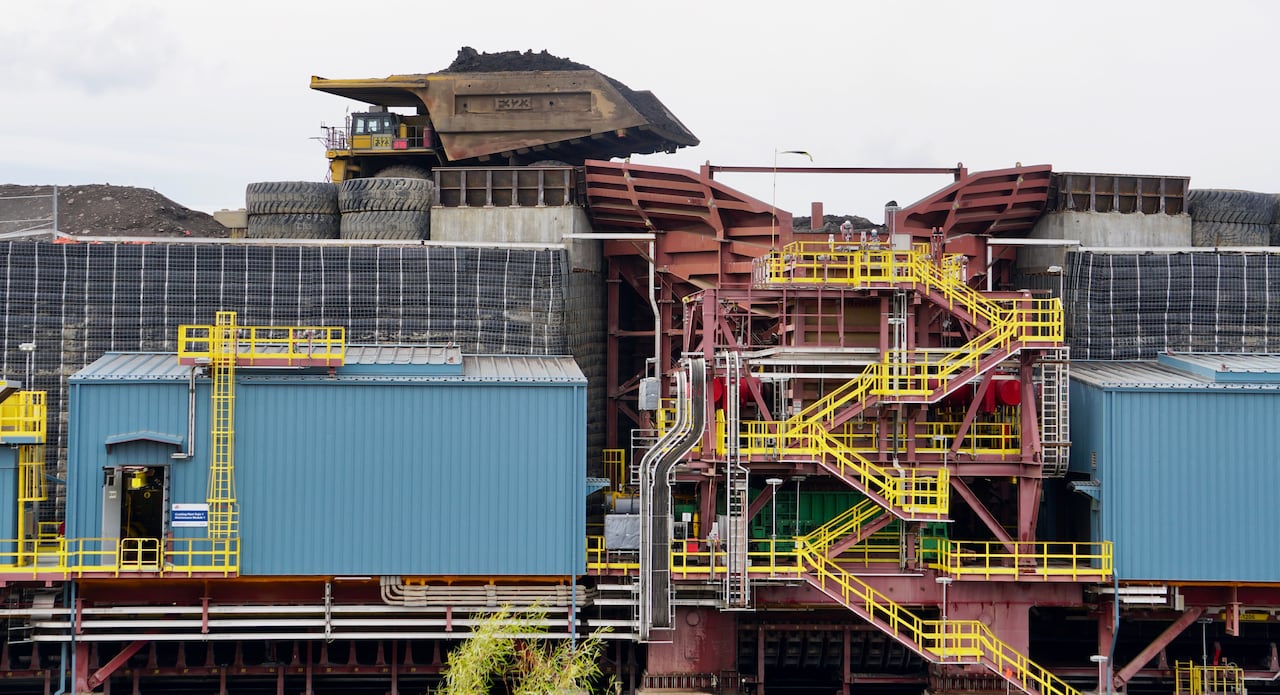
Suncor’s Fort Hills oilsands mine cost approximately $17 billion to develop and commenced operations in 2018. (Kyle Bakx/CBC)
Last year, the nation only extracted around 900,000 barrels per day, following years of dwindling investments due to sanctions and ineffective government policies.
Experts highlight that the oil industry’s infrastructure is in various states of disrepair, and it remains unclear how much funding will be necessary for repairs, let alone for constructing new facilities.
“The condition of these facilities is largely unknown,” stated Filstein, emphasizing that the lack of clarity in Venezuela presents a significant barrier for major U.S. energy firms considering investment. These companies might opt to allocate their capital to other global operations instead.
“Companies require stability and must know precisely how their finances are managed,” added Filstein.

U.S. President Donald Trump aims to take control of Venezuela’s energy sector and its vast oil reserves. As reported by CBC’s Kyle Bakx, this ambition is met with both excitement and caution from businesses and energy workers in Alberta.
Political challenges
In addition to the practical difficulties, political instability presents another hurdle.
Should Venezuela’s oil sector indeed recover, it is likely that both the U.S. and Venezuela will have different leadership and potentially new administrations by that time.
“There remains an open question regarding whether a future government in Venezuela would uphold this agreement if democracy is restored. Companies looking to invest face considerable financial and political risks,” noted Colin Mang, an economics professor at McMaster University in Hamilton.
“It’s uncertain whether American oil corporations will commit funds, at least not to the degree that the Trump administration anticipates,” he added.
Historically, foreign corporations have seen their Venezuelan assets expropriated, as was the case with ExxonMobil on two occasions.
To date, only a few companies, including Shell and Repsol, have shown interest in potential new investments in Venezuela’s oil and gas sector. Chevron, which already operates in the country, is evaluating an expansion.
The possibility of increased heavy oil imports into the U.S. should not instill fear in Canada, asserted Sprague, the former Alberta deputy energy minister.
He highlighted that global oil demand continues to rise, and Canada is enhancing its exports from the West Coast to international markets, including China and India.
The Trans Mountain pipeline system, which conveys oil from Edmonton to the Vancouver area, is currently at full capacity, with an initial expansion projected for completion by the end of the year.
Additionally, the Alberta government is collaborating with the federal government to pursue a new pipeline project along a similar path. A decision from the federal government regarding whether to classify the proposal as a “project of national interest” under the Building Canada Act is expected by October 1.
“The United States is seeking a variety of sources. That’s fine. We are also looking for a variety of markets,” Sprague stated.