

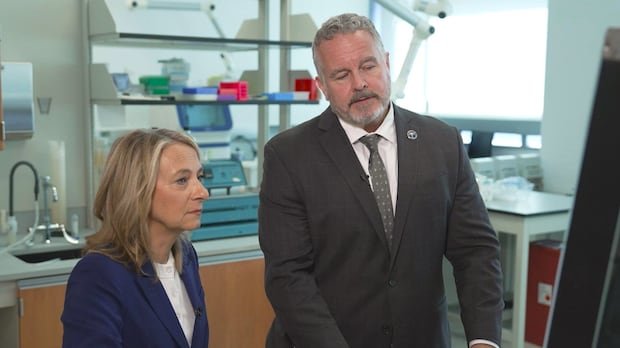

In a Manhattan lab, forensic scientists in white lab coats continue their dedicated work to fulfill a commitment made 25 years ago. They are extracting DNA from numerous human remains recovered after the World Trade Center attacks, aiming to match them with samples provided by family members from items like toothbrushes and razors.
The techniques used to extract DNA from the remains have evolved over time, utilizing new scientific methods and forensic investigative approaches that were not available in 2001. Mark Desire, the assistant director of forensic biology at the New York City Office of the Chief Medical Examiner, expressed the emotional impact of identifying and reuniting loved ones with their families.
Currently, 40% of the 2,753 individuals who perished at Ground Zero remain unidentified, including around 10 of the 24 Canadian victims. A recent breakthrough in the lab led to the first identification of previously unknown remains, with the woman’s family opting to keep her identity private.
The innovative technique merges DNA testing with genetic genealogy, involving family tree research conducted by the New York City Police Department. Dr. Jason Graham, the Chief Medical Examiner of New York, believes this breakthrough will pave the way for additional identifications in the future.
Despite the ongoing efforts, challenges persist in the excavation and preservation of remains. Desire, who was present at Ground Zero on the day of the attacks, shared his experiences of preserving evidence amidst the chaos. The massive destruction at the World Trade Center site necessitated careful excavation and preservation methods due to various factors that could degrade DNA.
The process of identifying remains has evolved over the years, with advancements in DNA extraction from bone fragments. However, bone remains the most challenging material to extract DNA from, requiring intensive procedures. The lab continues to face hurdles in identifying remains that are badly burned and have not undergone DNA extraction.
A new technique involving whole genomic sequencing and genealogical research offers renewed hope for identifying more remains. The Chief Medical Examiner’s Office urges families to provide samples to aid in making additional matches.
Despite these advancements, some families of victims whose remains have not been found may choose not to pursue identification. The emotional toll of receiving multiple notifications of potential matches can be overwhelming for some families, highlighting the complex nature of grief in the aftermath of the tragic events.
Individuals like Abigail Carter, who lost her husband in the attacks, have found their ways to honor their loved ones without the need for physical remains. Carter’s poignant tribute to her husband at her daughter’s wedding exemplifies the enduring connection to lost loved ones.
Monica Iken-Murphy, who lost her husband in the attacks, hopes for a day when his remains will be matched, but she prefers to keep them at the repository in the 9/11 Memorial and Museum, preserving memories of her husband in her own way.