


Recent weather forecasts indicate a possibility of encountering ice pellets and freezing rain as part of another chilly spell this winter for people in the UK.
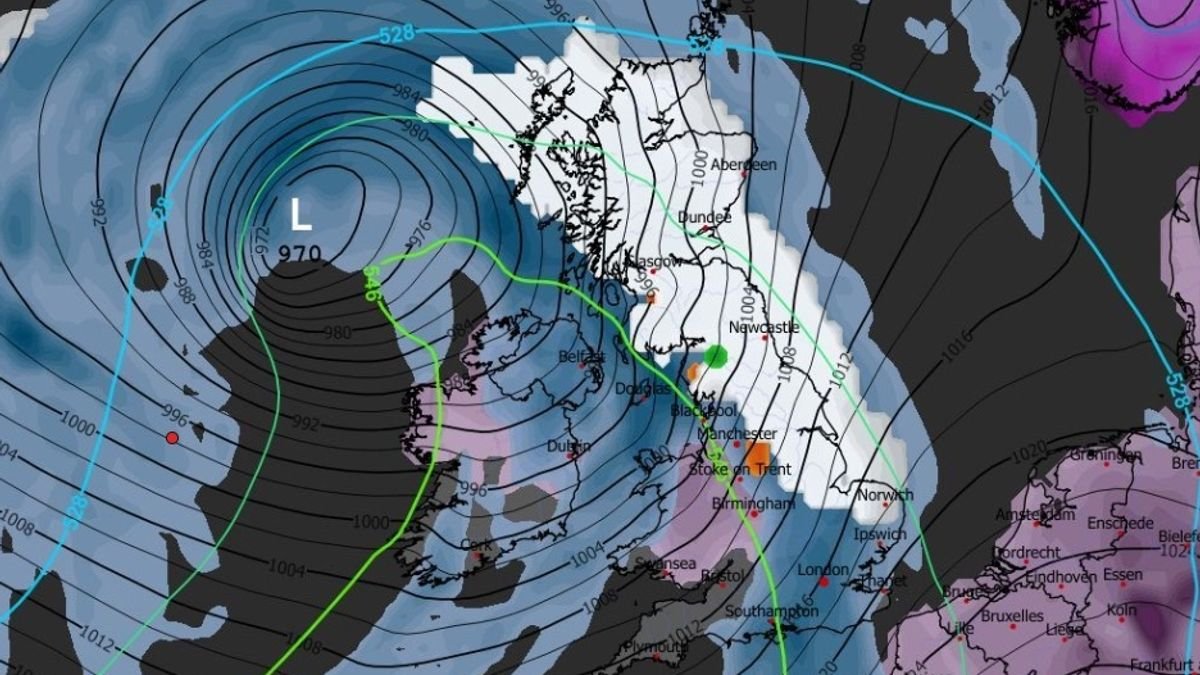
Based on data from the GFS model, there is a chance of unusual and potentially risky weather occurrences hitting the UK on February 1, coinciding with a mix of snow and rainfall across the nation. The maps suggest that approximately half an inch of snow might be observed starting early on February 1, with regions like the West Midlands and the north-west expected to bear the brunt of a snow band extending up to Belfast and Glasgow.
Further analysis reveals lighter snowfall in the north-east and isolated areas of freezing rain (depicted in orange) in Snowdonia. As the morning progresses, thicker snowfall could move towards the north-east, the East of England, and eastern Scotland, while additional patches of freezing rain might develop around the Peak District and Ayr.
The maps also indicate potential ice pellet formations (displayed in green) near Carlisle and the Scottish Borders. Later, the forecast predicts the northward movement of snow towards eastern Scotland by midday, with most areas in the UK – excluding London and parts of the south-east – likely to experience rainfall instead. Areas around Loch Lomond and Northumberland could be susceptible to freezing rain.
The long-range forecast from the Met Office anticipates a cooling trend from January 24 to February 2, heightening the possibility of snowfall, especially in hilly areas of Scotland and northern England.
Explaining the phenomenon, the Met Office describes freezing rain as a result of snow transitioning through warm and cold air layers, forming “supercooled” water droplets with sub-zero temperatures that fall as liquid. The impact of freezing rain includes hazardous icy patches on surfaces, posing risks for transportation and general safety.
Additionally, the weight of ice from freezing rain can lead to structural damage, such as breaking tree branches and power lines, as highlighted by the National Weather Service in the US.
Regarding ice pellets formation, the Met Office explains that they occur when snowflakes partially melt during descent and then refreeze into grain-like particles upon encountering sub-freezing air. These pellets, denser and smaller than hailstones, can accumulate on surfaces akin to snow but with a more compact coverage. Ice pellets typically exhibit a bouncing effect upon impact and are short-lived in showers.
At Reach and across our entities , we and our partners utilize data collected through various means to enhance user experience on our platform, analyze usage patterns, and deliver targeted advertising. You have the option to opt out of data sharing by clicking the “Do Not Sell or Share my Data” button on our website. Please be aware that these preferences are specific to your browser. Your use of our website and services indicates your consent to the use of cookies as outlined in our Privacy Notice and <a data-testid="cipa-terms-and-conditions-notice-link" href="https://www.mirror.co