

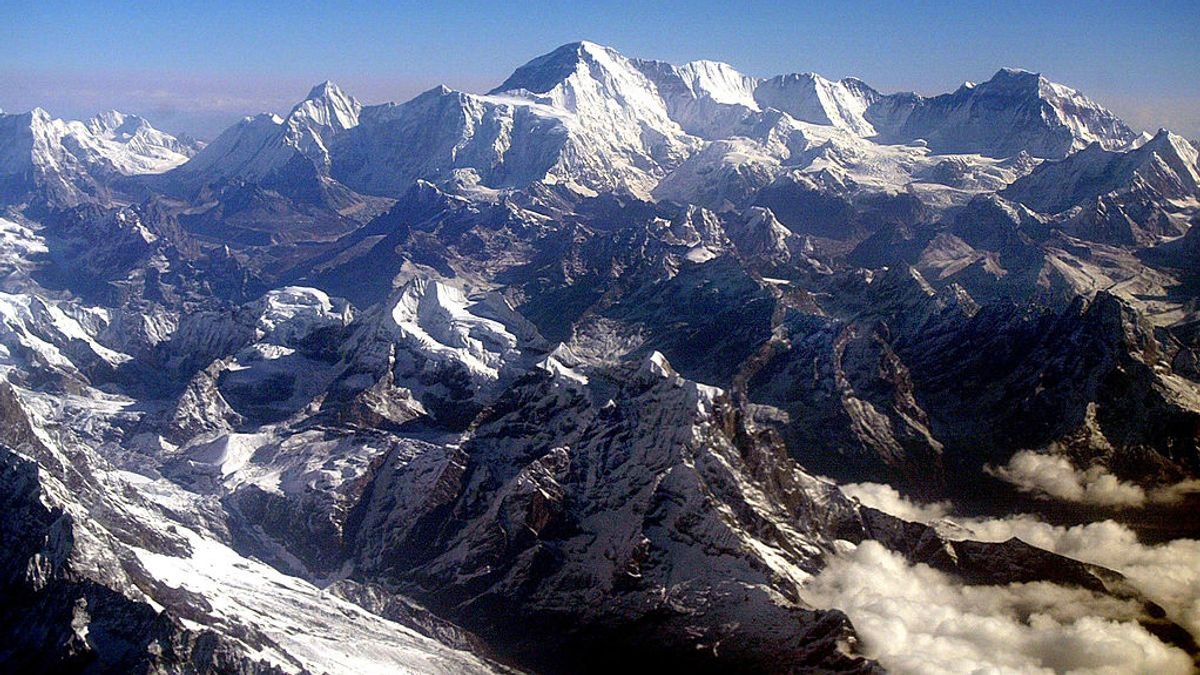

The unforgiving conditions on Mount Everest often lead to climbers’ bodies becoming frozen in place after death due to extreme cold and lack of oxygen. One such poignant case is that of Peter Boardman, whose body was discovered seated upright, gazing at the Himalayan panorama nearly a decade after he disappeared on the mountain with his climbing partner Joe Tasker.
Boardman and Tasker vanished in May 1982 while attempting a challenging route on Everest’s North-East Ridge without supplemental oxygen, solely relying on their skills and judgment. Their last sighting was at 27,000 feet in the treacherous “death zone,” where oxygen levels are critically low.
Despite search efforts, the fate of Boardman and Tasker remained a mystery until 1992 when a joint Japanese-Kazakh expedition found Boardman’s body at around 8,200 meters. Photos confirmed his identity, showing him seated against a rock, facing the vast mountain expanse below, indicating he likely succumbed to exhaustion. Tasker’s body was never located, suggesting he may have continued alone.
Both climbers, known for their daring and lightweight ascents, left a significant impact on the climbing community, with expedition leader Sir Chris Bonington noting their profound loss to the sport.